
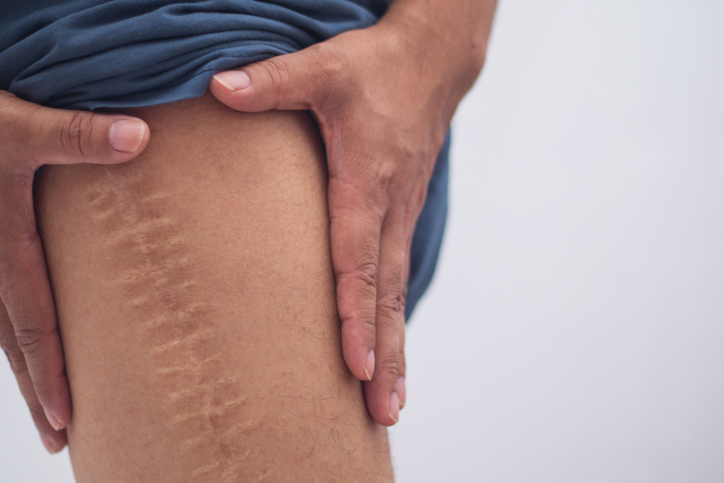
Benefits of Shockwave Therapy for Post-Surgical Scar Tissue
Surgery may solve the original problem, yet recovery can feel incomplete when scar tissue leaves the area tight, sensitive, or difficult to move. A healed incision may look fine on the surface while deeper layers still feel tethered during exercise, work, or everyday tasks. For some patients, shockwave therapy offers a non-invasive way to support tissue remodeling and restore more comfortable movement after the surgical site has healed.
The important word is support. Shockwave therapy does not erase a scar, and it is not appropriate for every person or every stage of recovery. A careful assessment should determine whether the restriction is related to the scar, whether the incision is ready for treatment, and how the therapy fits with the surgeon’s instructions and the rest of the rehabilitation plan.
What Is Scar Tissue After Surgery?
A surgical incision triggers a coordinated repair process. The body first controls bleeding and inflammation, then produces collagen to reconnect damaged tissues. Early collagen fibres form quickly and may sit in a less organized pattern. Over the following months, the body gradually remodels those fibres in response to time, circulation, movement, and mechanical load.
This repair material is essential. Without it, an incision could not regain strength. The goal of treatment is therefore not to destroy all scarring. The goal is to help a fully healed area become as mobile, comfortable, and functional as possible.
How scar tissue forms and changes
New scars often feel firm, raised, sensitive, or different from the surrounding skin. Many soften and flatten naturally. Remodeling can continue for a year or longer, so firmness by itself does not mean that something has gone wrong.
Problems may arise when collagen becomes unusually dense, tissue layers do not glide well, or deeper adhesions restrict movement. Genetics, the location and type of surgery, wound tension, complications, activity level, and rehabilitation can all influence the result.
Surface scars, adhesions, and fibrosis
A visible line on the skin is only one part of surgical healing. An adhesion is a connection between tissue layers that normally move more freely. Fibrosis refers more broadly to thickened or excess fibrous material. These terms are related, but they are not interchangeable, and a firm area cannot be diagnosed from appearance alone.
A clinician may assess how the skin and deeper tissues move, which motions reproduce the symptoms, and whether joint, muscle, tendon, nerve, or swelling-related factors are also involved.
When Does a Surgical Scar Need Attention?
Not every scar needs treatment. Consider an assessment when the incision is closed but your progress has stalled or the area interferes with activities that matter to you. Relevant signs may include:
- Persistent pulling, tightness, or tenderness around the healed area.
- Reduced range of motion or a sense that the skin is tethered.
- Discomfort during stretching, strengthening, or daily movement.
- A firm area beneath the skin that does not seem to be improving.
- Difficulty returning to work, recreation, or exercise because of restriction.
Contact your surgeon or another appropriate medical provider promptly if you notice increasing redness, warmth, drainage, fever, unexplained swelling, a wound that has opened, or worsening pain. These signs require medical assessment rather than routine scar-focused care.
What Is Shockwave Therapy?
Shockwave therapy uses a handheld applicator to deliver acoustic pressure waves to a targeted area. The energy creates mechanical stimulation in the tissue. Cells can respond to that stimulation through mechanotransduction, a process in which a physical signal prompts a biological response.
In musculoskeletal care, clinicians commonly use radial pressure waves or focused shockwaves for selected tendon and soft-tissue conditions. Researchers are also studying their role in scars and fibrosis. Proposed effects include changes in local circulation, pain signalling, fibroblast activity, collagen organization, and the extracellular matrix that surrounds cells.
Patients generally describe rhythmic tapping, pulsing, or pressure. The intensity can be adjusted to tolerance. Treatment is non-surgical and does not involve an injection, but the area may feel temporarily tender or mildly red afterward.
How May Shockwave Therapy Help Scar Tissue?
Marketing language sometimes says shockwaves simply “break up” a scar. Healing biology is more nuanced. The treatment applies controlled mechanical energy that may encourage the body to modify the quality and organization of a healed area over time.
Potential benefits for mobility and comfort
For an appropriate patient, the practical aim may be to improve tissue glide, reduce sensitivity, and make movement or rehabilitation exercises more tolerable. Some people seek care because a scar pulls during a squat, limits shoulder reach, feels bound down after abdominal surgery, or remains uncomfortable during normal activity.
Possible benefits include:
- Improved pliability and movement between tissue layers.
- Less discomfort or sensitivity during motion.
- Better tolerance for mobility and strengthening exercises.
- Support for local circulation and tissue-remodeling processes.
- Progress toward functional goals when combined with rehabilitation.
Results vary with the age and type of scar, the tissues involved, overall health, the original operation, and the rest of the recovery plan. No responsible provider should guarantee that the scar will disappear or that one treatment will restore full movement.
What Does the Research Say?
Research on shockwave therapy for scarring is encouraging, but it does not yet provide a universal protocol for every postoperative patient. A 2022 meta-analysis evaluated nine randomized trials involving 422 people with pathological burn scars. When shockwave therapy was added to comprehensive rehabilitation, the pooled findings favoured the combined approach for several outcomes, including pain, itching, appearance, elasticity, thickness, and scar maturation. The authors also emphasized the need for more well-controlled trials.
A later systematic review examining keloids and hypertrophic scars identified a mix of clinical and preclinical studies. It reported promising changes in characteristics such as texture, elevation, and fibroblast activity, while noting variation in study methods and treatment parameters. A recent randomized trial involving post-breast-reconstruction fibrosis also reported improvements in pain, softness, lesion size, and ultrasound findings compared with placebo.
What the evidence cannot yet tell us
Burn scars, keloids, hypertrophic scars, and postoperative adhesions are not identical. Findings from one group should not automatically be applied to every healed incision. Studies also use different machines, energy settings, numbers of pulses, and treatment schedules. The fairest conclusion is that shockwave therapy may help selected scar and fibrosis presentations, but treatment should be based on examination rather than a generic promise.
What to Expect at an OCWC Appointment
The first step is an assessment, not automatic treatment. Your practitioner will ask about the operation, date of surgery, current symptoms, healing history, medical conditions, medications, and any restrictions from the surgeon. The examination may include skin integrity, tenderness, mobility of the tissues, range of motion, strength, and the movements that matter to your goals.
If shockwave therapy is appropriate, gel is applied and a handheld applicator delivers pulses to the selected area. Intensity is adjusted according to the tissue and your comfort. A session is usually brief, although the complete appointment may also include reassessment, mobility work, soft-tissue care, or exercise guidance.
At OCWC, treatments may be scheduled every 5–7 days depending on the state, sensitivity, and response of the healed tissue. The number of visits is individualized. Progress should be judged by meaningful changes such as motion, comfort, and activity tolerance, not by a fixed package or a promise that everyone responds at the same pace.
Who May Be a Good Candidate?
An assessment may be worthwhile when the incision is fully closed, initial healing has progressed appropriately, and ongoing tightness or tenderness appears to limit function. Patients recovering from orthopaedic, abdominal, cosmetic, or other procedures may ask whether this approach belongs in their care, but the surgery type alone does not determine suitability.
Treatment may need to be delayed or avoided when the wound is open, infected, acutely inflamed, or medically unstable. Other factors can include bleeding disorders or anticoagulant use, altered sensation, pregnancy depending on the treatment area, certain implants or surgical materials, malignancy in the region, and nearby vulnerable structures. This is not a complete contraindication list. Your practitioner should screen you and, when appropriate, coordinate with your surgeon or medical team.
Shockwave therapy should never be used to bypass postoperative precautions. Clearance and timing depend on the procedure, the tissues repaired, and the surgeon’s directions—not simply the number of weeks since surgery.
Supporting Recovery Beyond Shockwave Therapy
A device cannot replace a complete rehabilitation plan. The best strategy usually combines the right treatment with gradual loading and consistent daily habits. Depending on your presentation, care may include:
- Range-of-motion exercises matched to the stage of healing.
- Progressive strengthening and a structured return to activity.
- Scar-mobility or soft-tissue techniques when clinically appropriate.
- Education about pacing, sensitivity, and realistic recovery timelines.
- Adequate sleep, nutrition, and adherence to the surgeon’s instructions.
The meaningful outcome is not whether a scar looks perfect. It is whether you can move, work, exercise, and live with greater confidence and less restriction.
Common Questions
Can shockwave therapy remove a surgical scar? No. The scar is part of the repair. Treatment may support remodeling, pliability, comfort, and function, but it cannot promise to erase the visible mark or eliminate all fibrous material.
How soon after surgery can treatment begin? There is no universal date. The incision must be appropriately healed, and the timing depends on the procedure, tissue involved, current symptoms, and the surgeon’s precautions. Never apply treatment over a fresh or open incision without specific medical direction.
Does the treatment hurt? You may feel rapid tapping or pressure, particularly over a sensitive area. The practitioner can adjust the intensity. Temporary soreness can occur, so your response should be reviewed before the next visit.
Can an older scar still improve? Mature scars can remain responsive to mechanical input, but age is only one factor. An assessment can determine whether the symptoms appear to come from the scar and whether shockwave therapy is a reasonable option.
Explore Shockwave Therapy in Edmonton
If a healed surgical area still feels tight, painful, or restrictive, you do not have to guess about the next step. Oliver Chiropractic Wellness Clinic can assess how the area moves, discuss your health and surgical history, and determine whether shockwave therapy fits your recovery plan.
Learn more about shockwave therapy at OCWC or book a shockwave therapy appointment online. You can also call 780-455-2112. If you are still under postoperative restrictions or have new symptoms, speak with your surgeon before beginning treatment.







Leave a Reply
Want to join the discussion?Feel free to contribute!