
Cupping Explained:
The Science and 3 Conditions It May Help
Those round marks on an athlete’s shoulders may catch your eye, but cupping is about more than a distinctive pattern on the skin. The treatment uses controlled suction to lift superficial tissues instead of pressing down on them. For people dealing with persistent aches, restricted movement, or stubborn muscle tension, that different mechanical input may offer short-term relief as part of a thoughtful care plan.
The technique has deep roots in traditional healing systems, yet modern practitioners also examine it through anatomy, circulation, connective tissue, and pain science. Research offers some encouraging findings, especially for musculoskeletal pain, but it does not support every claim made online. Understanding both the possibilities and the limits helps you decide whether the treatment fits your health goals.
What Is Cupping?
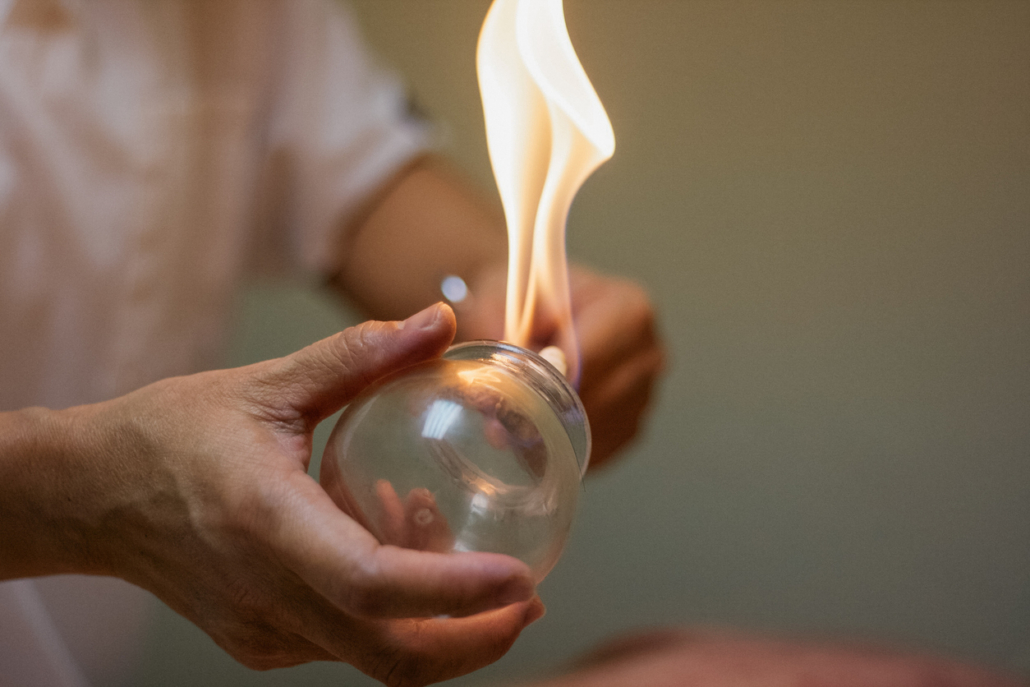
A practitioner places a specialized glass, plastic, or silicone cup on the skin and removes some of the air inside it. The resulting pressure difference draws the skin upward. Depending on the method, the cup may remain in one place for several minutes or glide across lubricated skin. The amount of suction and treatment time can be adjusted for comfort, body area, tissue sensitivity, and the purpose of the session.
This is mechanically different from most hands-on massage techniques. Massage commonly compresses, kneads, or glides over soft tissue. A suction cup creates a lifting force. That does not mean it physically separates every layer of muscle or breaks up scar tissue. It does provide a distinct sensory and mechanical stimulus that some people find helpful.
Dry, Static, Moving, and Wet Methods
Dry therapy leaves the skin intact. Static treatment keeps cups in selected positions, while moving treatment uses smooth gliding motions. Dynamic silicone-cup work is often incorporated into a massage session. Wet treatment involves small skin incisions and blood exposure; it carries additional infection-control considerations and is not the same service as routine dry or moving techniques.
At Oliver Chiropractic Wellness Clinic, this approach may be included in care provided by a trained massage therapist or a registered acupuncturist, depending on the appointment and the practitioner’s assessment. Alberta regulates acupuncturists under the Health Professions Act. Massage therapy is not currently a provincially regulated health profession, although massage therapists may hold professional association registration, substantial training, and insurance-recognized credentials.
How Cupping Creates Negative Pressure
The cup forms a seal against the skin. A pump, flexible cup, or carefully controlled heat method lowers the air pressure inside, so the higher pressure outside the cup pushes the skin into it. This force stretches the skin and superficial connective tissues and affects small blood vessels in the area. The visible response can range from mild pinkness to dark circular discolouration.
Those marks are not evidence that toxins have been removed. Research on the physical response points instead to dilation and, at stronger doses, rupture of tiny superficial vessels. The body gradually clears the resulting pigments, much as it does with a bruise. Colour varies with suction strength, duration, location, skin characteristics, and individual response; it is not a score for treatment quality.
How Science Explains the Suction Response
No single mechanism fully explains why some patients report less pain or easier movement afterward. Several local and nervous-system responses may overlap. The most responsible interpretation is that these are plausible contributors, not proof that one pathway causes every reported benefit.
Changes in Skin, Connective Tissue, and Local Blood Flow
Negative pressure mechanically deforms the skin and superficial tissue. Laboratory and physiological research indicates that it can increase local blood flow and change microcirculation for a period after treatment. The lifting force may also alter how tissue layers move relative to one another. These effects are measurable, but researchers have not established that more blood flow automatically means faster healing.
The sensation itself may matter. A broad pulling force can feel quite different from direct pressure on a tender spot. For someone who finds deep compression uncomfortable, a carefully dosed suction technique may offer another way to work around a sensitive region. Comfort still matters: stronger is not necessarily better.
Pain Signalling and the Nervous System
Pain is not a direct meter of tissue damage. It is a protective experience shaped by signals from the body, the nervous system, previous experiences, stress, sleep, expectations, and context. Strong but tolerable sensory input from a cup may temporarily change how the nervous system processes competing signals. Researchers sometimes describe this as pain modulation.
That explanation helps account for an important clinical pattern: a person may feel better or move more freely even when the treatment has not repaired a specific structure. Short-term relief can still be valuable. It may make it easier to exercise, sleep, work, or participate in a broader rehabilitation plan. Lasting improvement often depends on the underlying condition and other factors such as activity, strength, workload, and recovery.
What Research Says About Cupping
A 2025 systematic review in BMJ Open found a moderate-quality signal for immediate pain reduction in chronic musculoskeletal pain. It did not find significant improvement in functional disability or mental health, and the results varied substantially among studies. A 2024 review of low back pain trials also reported encouraging pain and disability findings, but differences in treatment type, location, duration, and patient groups made the overall picture less certain.
A broader review of musculoskeletal and sports rehabilitation rated evidence for neck and low back pain as low to moderate and evidence for many other conditions as low or very low. The U.S. National Center for Complementary and Integrative Health reaches a similarly cautious conclusion: the treatment may reduce pain, but much of the available research is low quality.
These findings do not mean the treatment has no value. They mean we should set realistic goals, assess the whole person, and track whether care produces a meaningful change. It should complement appropriate diagnosis, movement, exercise, sleep, or medical care rather than replace them.
Three Conditions That May Benefit
1. Neck Pain and Neck-Related Muscle Tension
Long hours at a computer, repeated overhead activity, stress, and sudden changes in workload can leave the neck and upper shoulders feeling tight or sore. The muscles may guard, movement may feel limited, and pressure over the area may become uncomfortable. Suction applied to selected upper-back or shoulder regions may offer a different sensory input and provide short-term relief for some people.
The goal is not to force the neck into motion or claim to correct posture in one visit. A practitioner can assess range of motion, symptom behaviour, daily demands, and sensitivity before choosing treatment intensity. Home strategies may include movement breaks, gradual strengthening, sleep-position adjustments, or workstation changes.
Seek prompt medical assessment after significant trauma or when neck pain occurs with progressive weakness, loss of coordination, fever, a sudden severe headache, chest pain, or other concerning symptoms.
2. Persistent Low Back Pain
Low back pain can involve a mix of tissue sensitivity, muscle guarding, reduced confidence in movement, and changes in activity. Research suggests suction-based treatment may help some adults manage pain in the short term, although results differ according to the technique and the type of back pain. It is best viewed as one option within an individualized plan.
A productive session should connect symptom relief to function. If treatment makes bending, walking, sleeping, or exercising more comfortable, the next step may be a gradual return to meaningful activity. Depending on your assessment, care may also include massage, acupuncture, chiropractic treatment, mobility work, or progressive exercise.
Back pain accompanied by new bowel or bladder changes, numbness around the groin, rapidly worsening leg weakness, fever, unexplained weight loss, or major trauma needs timely medical evaluation. A hands-on wellness treatment should not delay appropriate investigation.
3. Myofascial Pain and Exercise-Related Muscle Tightness
Myofascial pain is a broad term for discomfort associated with muscles and their surrounding connective tissues. It may feel like a localized ache, a sensitive band, or tension that appears during certain movements. Active people may notice these symptoms in the shoulders, upper back, hips, thighs, or calves after training, repetitive work, or a rapid increase in activity.
Moving or static cups may temporarily change sensitivity and make an area feel less restricted. That window can support comfortable movement, but it does not prove that adhesions were broken or metabolic waste was pulled from the muscle. Delayed-onset muscle soreness also improves naturally with time, so recovery claims deserve caution.
Consider the broader pattern. Recurrent tightness may reflect training volume, technique, strength, sleep, stress, or insufficient recovery. A useful plan looks beyond the sore spot and helps you make sustainable adjustments rather than relying on repeated passive treatment alone.
What to Expect, Safety, and Next Steps
Your appointment should begin with a health history and assessment. Tell your practitioner where you feel symptoms, what aggravates or eases them, how long they have been present, and what you want to return to doing. The practitioner will explain the proposed technique, expected sensations, alternatives, and possible skin response before asking for consent.
During and after a session, you can generally expect:
- A pulling or stretching sensation that should remain tolerable, not sharp or alarming.
- Temporary redness or circular discolouration that may last several days and occasionally longer.
- Possible short-lived tenderness, skin sensitivity, fatigue, or light-headedness.
- Aftercare based on your response, such as normal gentle movement and monitoring the skin.
The treatment should not be applied over broken, infected, burned, or acutely inflamed skin. Extra caution may be needed with bleeding disorders, blood-thinning medication, impaired sensation, fragile skin, certain vascular conditions, pregnancy, or a history of fainting. Wet and fire-based methods carry additional risks, including infection or burns. Share your medications and health conditions so the practitioner can decide whether to modify, postpone, or avoid treatment.
Does it hurt? Most people describe pressure or pulling rather than pain. Sensation varies by location and suction level, and you can ask for the intensity to be reduced or the cup removed at any time. A good treatment is collaborative; dramatic marks and high intensity are not the objective.
The best way to decide whether this approach belongs in your wellness plan is to start with an individualized conversation. At Oliver Chiropractic Wellness Clinic, a massage therapist or registered acupuncturist can review your goals, assess whether the technique is appropriate, and explain how it may fit alongside other care.
Ready to explore your options? Book an appointment online with Oliver Chiropractic Wellness Clinic in Edmonton.

Leave a Reply
Want to join the discussion?Feel free to contribute!