
Indoor Soccer Injuries
Staying Healthy During Winter
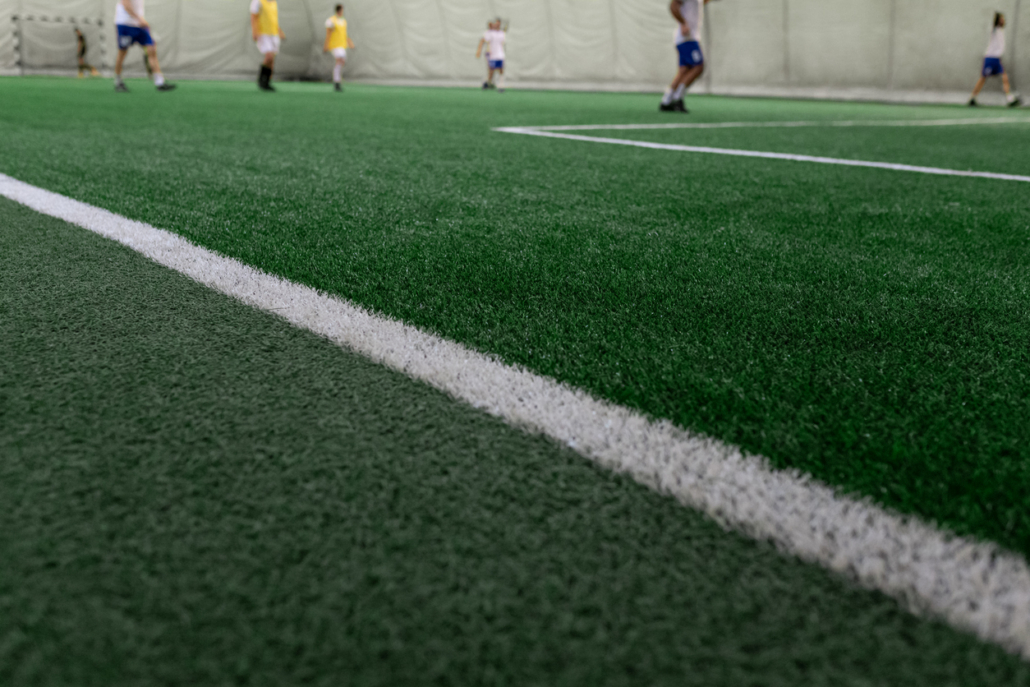
Indoor soccer injuries are extremely common for athletes of all skill levels. Indoor soccer offers Edmonton players a way to continue playing when outdoor fields have been replaced by snowbanks, ice, and the annual civic experiment of seeing how many potholes a vehicle can tolerate.
Indoor soccer keeps players active through the winter, but it also places different demands on the body.
The field is smaller, the pace is fast, the surface is firm, and players change direction frequently. There may also be limited time for warm-up before games.
These factors can contribute to indoor soccer injuries involving the ankles, knees, calves, hips, and lower back.
How Indoor Soccer Differs from Outdoor Soccer
Indoor soccer often involves:
- Shorter, faster bursts of running
- More frequent acceleration and deceleration
- Rapid direction changes
- Increased contact in a smaller space
- A firmer playing surface
- Repeated games or shifts with limited recovery
Artificial turf can provide consistent traction, but the relationship between footwear and the surface can affect how the foot and leg rotate.
Too much traction may place additional stress on the ankle or knee when the player pivots. Too little traction can contribute to slipping.
The faster pace may also leave players less time to prepare their bodies for contact, landing, or sudden movement.
Common Indoor Soccer Injuries
Ankle Sprains
Quick direction changes and crowded play increase the risk of stepping awkwardly or landing on another player’s foot.
Ankle sprains can cause swelling, bruising, stiffness, and instability. Players should not assume that the ankle is fully recovered simply because they can walk without pain.
Running, cutting, and reacting to contact require more stability than normal walking.
Calf Strains
Indoor soccer involves repeated short sprints and sudden stops. These movements place significant demand on the calf muscles.
A calf strain may cause sharp pain, tightness, weakness, or difficulty pushing off the foot.
Calf injuries can also be associated with reduced ankle mobility, fatigue, or an abrupt increase in activity.
Achilles Tendon Pain
The Achilles tendon connects the calf muscles to the heel.
Repeated sprinting and forceful push-off can irritate the tendon, especially when a player has recently increased activity or returned after time away.
Symptoms may include:
- Morning stiffness
- Tenderness near the heel
- Pain at the beginning of activity
- Pain that worsens after playing
- Thickening or swelling around the tendon
Achilles pain should be addressed early. Tendons are remarkably useful structures, but they tend to object when humans repeatedly ignore them.
Knee Pain
Indoor soccer requires frequent pivoting, stopping, and lateral movement.
Knee pain may involve the kneecap, tendons, ligaments, meniscus, or surrounding muscles.
Players should seek assessment if the knee swells, locks, catches, gives way, or cannot fully bend or straighten.
Hip and Groin Pain
Rapid kicking, reaching, and direction changes can irritate the muscles around the hips and groin.
Pain may develop gradually and may be worse with sprinting, kicking, or bringing the legs together.
Persistent groin pain may require a more detailed assessment because several structures in the hip and pelvis can produce similar symptoms.
Plantar Fascia and Foot Pain
The firm indoor surface can increase stress on the feet, especially when footwear is worn, poorly fitted, or inappropriate for the turf.
Pain may develop beneath the heel, through the arch, or around the forefoot.
Foot pain can also change the way a player runs and increase stress on the ankle, knee, or hip.
Why Winter Can Increase Injury Risk
Several winter-related factors may contribute to injury.
Reduced General Activity
Some players are less active outside of scheduled games during winter. They may arrive at the facility after sitting at work, sitting in traffic, and walking only far enough to escape the cold.
Moving directly from prolonged sitting into intense sprinting is not ideal preparation.
Limited Warm-Up Time
Indoor facilities often operate on tight schedules. Teams may have only a few minutes on the field before the game begins.
Players should perform a basic warm-up away from the field when possible.
This may include light jogging, leg swings, lunges, calf raises, and controlled direction changes.
Inconsistent Training
A player may participate in one intense indoor game per week without doing much physical activity between matches.
This creates a large difference between normal weekly activity and game demands.
Regular strength, mobility, and cardiovascular exercise can help reduce that gap.
Footwear Changes
Indoor shoes or turf shoes may feel very different from outdoor cleats.
Players should make sure their footwear fits properly and provides appropriate traction for the playing surface.
Tips for Preventing Indoor Soccer Injuries
To reduce injury risk:
- Warm up before taking the field.
- Include strength training during the winter.
- Perform balance and ankle-stability exercises.
- Wear footwear suited to the surface.
- Increase activity gradually.
- Avoid playing through worsening pain.
- Recover properly between games.
- Maintain mobility in the ankles, hips, and lower back.
Players returning from an outdoor-season injury should complete appropriate rehabilitation before assuming indoor soccer will somehow count as rest.
How Chiropractic Care May Help
A chiropractor can assess pain, joint movement, muscle function, balance, and sport-specific movement.
Care may include:
- Joint mobilization or chiropractic adjustments
- Soft tissue treatment
- Mobility exercises
- Strengthening recommendations
- Balance and stability work
- Advice about modifying activity
- Return-to-play planning
More serious injuries may require medical evaluation, imaging, or referral.
The goal is to determine the nature of the injury and help the player return safely rather than simply reducing symptoms temporarily.
Frequently Asked Questions
Is indoor soccer harder on the knees?
Indoor soccer involves frequent cutting and stopping on a firm surface, which can place substantial demand on the knees. Individual risk depends on footwear, strength, previous injuries, fatigue, and movement mechanics.
Are turf shoes better than regular running shoes?
Footwear should provide suitable traction, support, and fit for the specific surface. Ordinary running shoes may not provide the lateral stability needed for indoor soccer.
Should I warm up before entering the field?
Yes. When field time is limited, begin warming up in an appropriate area before the scheduled game.
Can I play indoor soccer with Achilles pain?
Continuing to play may aggravate tendon symptoms. Achilles pain should be assessed, particularly when it is worsening, affecting running, or causing significant morning stiffness.
Indoor Soccer Injury Care in Edmonton
Oliver Chiropractic Wellness Clinic helps Edmonton athletes manage indoor soccer injuries involving the back, hips, knees, ankles, and muscles.
If pain is affecting your movement or keeping you from playing comfortably, contact our downtown Edmonton clinic to schedule an assessment.

Leave a Reply
Want to join the discussion?Feel free to contribute!