
• Book Online
(780) 455-2112 | info@ocwc.ca
Oliver Chiropractic Wellness Clinic
  • Why OCWC
    • About Us
    • Our Team
    • Client Reviews
  • Services
    • Chiropractic
    • Massage
    • Custom Orthotics
    • Cupping Therapy
    • Hot Stone Massage Therapy
    • RAPID NeuroFascial Release Therapy
    • Graston Technique
    • Manual Lymphatic Drainage
    • Craniosacral Massage Therapy
    • Stretch Therapy
    • Acupuncture (General)
    • Acupuncture (Facial)
    • Shockwave Therapy
    • Manual Osteopoathy
    • FAQ
  • New Patients
    • What to Expect
    • Forms
      • OCWC Cancelation/Financial Policy
  • Blog
  • Contact
    • General Inquiries
  • Book Online
  • Menu Menu
You are here: Home1 / cupping

Posts

massage therapy for neck pain

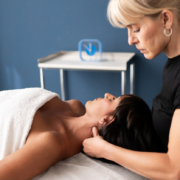
Massage Therapy for Neck Pain and Tension Headaches

October 6, 2026/0 Comments/in Massage /by Dr. Kent Ferguson

What Does Massage Research Say?

Neck tension has a way of shrinking your day. Turning to check traffic becomes awkward, computer work feels harder, and an evening workout may seem less appealing. If you are considering massage therapy for neck pain, the useful question is not whether massage is a miracle solution. It is whether hands-on care could help you feel and move more comfortably as part of an appropriate plan.

That distinction matters. Neck pain can arise from many sources, including irritated joints, sensitive muscles, an injury, repetitive workload, poor recovery, or pain referred from another area. Massage cannot diagnose or correct every cause. Research does suggest that it may provide short-term relief for some people, especially when muscle tension or protective guarding contributes to their symptoms.

At Oliver Chiropractic Wellness Clinic in downtown Edmonton, a registered massage therapist begins by learning what you feel, when it occurs, and how it affects your life. Your session can then be adapted to your goals rather than following a one-size-fits-all routine.

What Is Therapeutic Massage?

Therapeutic massage uses hands-on techniques to work with muscles and other soft tissues. Depending on your assessment, preferences, and health history, treatment may include Swedish massage, manual deep-tissue work, cupping, hot stone massage, or instrument-assisted techniques such as Graston.

The word “therapeutic” does not mean the treatment must feel intense. Effective pressure is pressure you can tolerate without bracing, holding your breath, or feeling that you need to endure the session. A lighter Swedish approach may suit someone seeking general relaxation. Focused manual work may be appropriate when a particular muscle group feels tight or overworked. Cupping, hot stones, or Graston may be considered when they fit the therapist’s assessment and the patient’s preferences.

Treatment should remain collaborative. You can ask questions, change the pressure, decline a technique, or request that an area not be treated at any time.

Massage Therapy for Neck Pain: What the Evidence Shows

Research on massage and neck pain presents a more nuanced picture than many online benefit lists suggest. A 2024 Cochrane review concluded that massage probably makes little to no difference in pain, function, or health-related quality of life compared with a placebo for subacute or persistent neck pain at up to 12 weeks. The authors rated much of the evidence as low certainty.

Another 2024 systematic review included 42 studies and 2,656 participants. Its results varied according to the treatment used for comparison, and the authors noted problems such as imprecision and a high risk of bias in many trials. In plain language, some people and some study groups improved, but the research does not support promising the same result to everyone.

This does not make massage irrelevant. It tells us to use it for realistic goals: easing symptoms, reducing the sense of tightness, making movement more comfortable, and helping a patient participate in exercise or daily activity. Your response to care matters more than a sweeping claim.

Why Neck Discomfort Is Rarely Caused by One Muscle

The neck works as part of a larger system. The upper back, shoulder blades, chest, jaw, breathing pattern, workload, sleep, and stress response can all influence how the area feels. A person who spends hours at a computer may develop fatigue through the neck and shoulders, but posture alone does not explain every case of pain.

Protective muscle guarding can also continue after an initial irritation. Your nervous system may treat certain movements as threatening, causing muscles to tighten before you reach the end of a comfortable range. A massage therapist can assess the surrounding soft tissues while respecting the possibility that the source may require evaluation by another health professional.

Massage Therapy for Neck Pain Compared With Other Active Treatments

Massage has not consistently outperformed exercise or other active treatments in clinical research. That comparison is important because long-term improvement often requires more than time on a treatment table.

A practical care plan may combine short-term symptom relief with exercises that build strength, tolerance, and confidence in movement. Massage may help create a more comfortable window in which to move. Exercise can then help you develop the capacity needed for work, recreation, and daily tasks. The two approaches have different jobs, and they do not need to compete.

How Muscle Tension Can Affect Daily Movement

Muscle tension is not automatically harmful. Muscles contract whenever you work, stabilize a joint, lift a bag, or hold your head upright. The problem arises when tension becomes uncomfortable, persistent, or limiting.

Guarding, Stiffness and Sensitivity Around the Neck and Shoulders

A tense area may feel hard, tender, tired, or unusually sensitive to pressure. You might notice discomfort across the upper shoulders, between the shoulder blades, or near the base of the skull. Some people feel worse after a long period of stillness; others notice symptoms after unfamiliar activity or a demanding workout.

Hands-on treatment may temporarily change how tender or restricted an area feels. That change can make it easier to turn your head, reach overhead, or settle into a more comfortable resting position. The effect does not prove that tissue was “broken up” or that toxins were released. A more responsible explanation is that touch, pressure, movement, expectations, and the nervous system can influence the experience of pain and muscle tone.

When Restricted Movement Begins Changing Everyday Habits

Small adaptations can accumulate. You may rotate your whole torso instead of turning your neck, avoid one side while carrying groceries, skip a favourite activity, or constantly reposition at your desk. These strategies can be reasonable for a short time, but ongoing avoidance may reduce confidence and capacity.

Useful progress is therefore not limited to a pain score. It might mean checking your blind spot more easily, completing a workday with fewer interruptions, sleeping in a preferred position, or returning to strength training with an appropriate plan.

Tension-Type Headaches and Tight Neck Muscles

Headaches deserve careful assessment because they have many possible causes. Massage may be considered when a clinician has identified a tension-type pattern or when neck and shoulder tension accompanies a familiar headache. It should not be used to explain away a new, severe, or unusual headache.

Common Features of a Tension-Type Headache

Tension-type headaches are often described as pressure or tightness rather than pulsing pain. They may affect both sides of the head and can occur with tenderness in the scalp, neck, or shoulders. Symptoms and triggers vary, so a label based only on how a headache feels may be unreliable.

A systematic review and meta-analysis published in 2021 found that manual therapy may have positive effects on the pain intensity and frequency of tension-type headaches. The authors also stressed that more studies are needed to strengthen the evidence. This supports a measured “may help” rather than a guarantee.

Massage Therapy for Neck Pain and Associated Headache Patterns

When neck tension and a familiar headache occur together, an RMT may assess the upper shoulders, upper back, muscles near the base of the skull, and jaw-related tension when appropriate. Treatment should be adjusted to your comfort because aggressive pressure around a sensitive neck can make some people feel worse.

Track outcomes that matter: headache frequency, intensity, medication use, sleep interruption, and ability to work or exercise. If there is no meaningful improvement after a reasonable trial, your care plan should be reconsidered.

Seek urgent medical care for a sudden “worst headache,” a headache after significant trauma, or a headache accompanied by weakness, confusion, fainting, fever, a stiff neck, vision loss, chest pain, or other alarming symptoms.

Can Massage Improve Mobility?

Many patients use “flexibility” and “mobility” interchangeably, but they are not quite the same. Flexibility describes how far a tissue or joint can be moved. Mobility also involves control, coordination, comfort, and confidence within that range.

Measuring Useful Change in Comfort and Range of Motion

Before and after a session, your therapist may ask you to turn, bend, reach, or perform another relevant movement. A small change can be worthwhile if it improves a meaningful task. It is less useful to chase a dramatic range-of-motion number that does not carry into daily life.

Short-term changes also need context. If movement improves for only a few hours, that information can guide the next step. You may need a different technique, a modified appointment schedule, an exercise progression, ergonomic changes, or assessment by another provider.

Why Massage May Work Best Alongside Exercise and Movement

Movement gives your body a chance to use the comfortable range available after treatment. Your therapist may suggest gentle exercises, regular position changes, or a gradual return to activity. These recommendations should match your symptoms and abilities rather than relying on rigid posture rules.

Massage is not a substitute for strength, cardiovascular activity, sufficient sleep, or medical care when those are needed. It can be one component of a broader strategy built around the activities you want to maintain.

Who May Benefit From a Massage Assessment?

An individualized assessment may be useful for:

  • Office workers with recurring neck and shoulder tension.
  • Drivers who feel stiff after prolonged sitting.
  • Recreational athletes managing training-related tightness.
  • People who notice muscle guarding during stressful periods.
  • Patients following a coordinated chiropractic, rehabilitation, or exercise plan.
  • People seeking maintenance care after a previous issue has settled

Massage is not appropriate in every circumstance. Tell your RMT about medications, recent surgery, pregnancy, osteoporosis, blood-clotting concerns, skin infections, fractures, cancer treatment, fever, new neurological symptoms, or other relevant health conditions. The therapist may modify treatment, avoid an area, or recommend medical clearance.

Progressive arm or leg weakness, numbness, loss of coordination, unexplained weight loss, fever, severe night pain, bowel or bladder changes, or symptoms after significant trauma require prompt medical assessment. Chest pain, shortness of breath, stroke-like symptoms, or a sudden severe headache require emergency care.

What to Expect From an Individualized Treatment

Your first appointment should begin with a health history and a conversation about your goals. Be specific. “I want to turn my head more comfortably while driving” gives your therapist more useful direction than “my neck is tight.”

Your RMT may assess relevant movements and explain the proposed approach. OCWC offers Swedish massage, manual deep-tissue techniques, cupping, hot stone massage, and Graston. Not every technique is suitable for every person or every visit. Selection depends on the assessment, your health history, your response, and your informed consent.

During treatment, communicate if the pressure feels too strong, you experience numbness or sharp pain, or you simply want something changed. Afterward, mild temporary tenderness can occur, but severe or worsening symptoms should be reported. Your therapist can discuss what to monitor and whether another appointment makes sense.

There is no universal treatment frequency. Someone with a recent flare may choose a short trial followed by reassessment. Another person may book occasional maintenance visits because the sessions help them stay comfortable during a demanding work or training schedule. The right interval should reflect your goals, response, budget, and overall plan.

Is Massage Therapy for Neck Pain Worth Considering?

Massage is not a cure-all, and the research does not justify guaranteed results. It may still provide meaningful short-term support when muscle tension, tenderness, or guarding contributes to your discomfort. The most useful approach combines honest expectations, individualized care, and regular reassessment.

If neck or shoulder tension is interfering with work, driving, exercise, or rest, talk with a registered massage therapist about whether treatment fits your needs. Oliver Chiropractic Wellness Clinic offers Swedish massage, manual deep-tissue work, cupping, hot stone massage, and Graston in downtown Edmonton.

Ready to get started? Book your appointment online with Oliver Chiropractic Wellness Clinic.

massage therapy in Edmonton

Massage Therapy in Edmonton A Complete Guide to Personalized Care

August 20, 2026/0 Comments/in Massage /by Dr. Kent Ferguson

A Complete Guide to Personalized Care

You do not have to wait until discomfort disrupts your work, workouts, or sleep before considering massage therapy in Edmonton. Some people book because an injury or stubborn muscle tension is limiting them. Others want to recover well between training sessions, stay mobile through a demanding season, or make hands-on care part of their regular health maintenance. Whatever brings you in, a useful massage appointment should begin with your goals, not a one-size-fits-all routine.

At Oliver Chiropractic Wellness Clinic, massage care is tailored to the person on the table. Your therapist considers your health history, current concerns, activities, preferences, and available appointment time before recommending an approach. That may mean focused manual therapy for a painful area, a broader session for general tension, or a thoughtful blend of techniques to support mobility and relaxation.

What Is Massage Therapy and How Does It Work?

Massage therapy uses hands-on techniques to work with muscles, fascia, and other soft tissues. A therapist may apply pressure, guide movement, stretch an area, or use an appropriate tool to address the priorities discussed before treatment. The purpose may be to ease muscular tension, improve comfortable movement, support recovery, or promote relaxation and a greater sense of well-being.

Massage is not a promise to cure an injury or health condition. Research suggests that it may help some people manage certain types of pain, but results and the duration of benefit vary. A persistent, severe, unexplained, or worsening symptom may need assessment by a physician or another qualified health professional.

Therapeutic care and relaxation are not opposites. A session can have a clinical purpose while still feeling calming. Likewise, effective treatment does not always require intense pressure. The best approach is the one that fits your body, goals, health considerations, and comfort that day.

Personalized Care Starts With Your Goals

Before treatment, your massage therapist will ask what prompted the visit and what you hope to change. This conversation helps define a useful focus. An athlete preparing for an event may have different priorities from someone returning to activity after a strain. A client who spends long days at a computer may want attention on the neck, shoulders, forearms, or back. Someone booking for general maintenance may prefer a balanced session that checks in on recurring areas of tension.

Your health history matters. Share recent injuries, surgeries, medications, skin concerns, circulation issues, pregnancy, or other conditions that could affect treatment. This helps your therapist select suitable techniques and recognize when a session should be modified or another health care provider consulted.

Personalization continues once treatment begins. Pressure, position, draping, temperature, music, conversation, and the areas being treated can all affect your comfort. You can ask a question or request a change at any time. Clear feedback is part of good care, not an interruption to it.

Techniques That May Be Included in Your Treatment

Depending on your therapist’s training and your clinical needs, your appointment may include one or more of the following:

  • Manual therapy, using hands-on pressure and movement selected for the tissues and areas being addressed.
  • Cupping, which uses suction and may be incorporated when it suits the treatment goal and the client is comfortable with it.
  • Assisted stretching, used to explore or support comfortable movement and flexibility.
  • Graston® or another form of instrument-assisted soft tissue mobilization, using a specialized tool to work with selected areas of soft tissue.
  • Hot stone therapy, using warmth as part of a calming or muscle-focused treatment when appropriate

These techniques are included as part of your treatment at no additional cost when they are appropriate. You do not need to choose every modality while booking or arrive with a detailed treatment plan. Your therapist will discuss the options, explain what they recommend, and respect your preferences and consent.

More modalities do not automatically make a session more effective. Appointment length, the area being treated, your condition, and your response all influence what can be used responsibly. It may not be appropriate to incorporate more than three treatment modalities in one visit. A focused session often leaves more time to apply each chosen method thoughtfully and reassess how you are responding.

Who May Benefit From Massage Therapy in Edmonton?

People seek massage care for many reasons, and no single client profile defines a “massage person.” The common thread is a desire to feel more comfortable, move with greater ease, recover from physical demands, or create intentional time for health maintenance.

Massage may be worth discussing with a qualified therapist if you are:

  • Managing muscle tension or soreness related to work, posture, travel, caregiving, or everyday activity.
  • Recovering from an appropriate soft-tissue injury and have been advised that massage fits your stage of care.
  • Training for a sport, returning to activity, or balancing challenging workouts with adequate recovery.
  • Experiencing stiffness or guarded movement that seems connected to tight or overworked tissues.
  • Interested in regular wellness care that supports relaxation, body awareness, and comfortable mobility.

For pain or injury concerns, the therapist can focus on relevant soft tissues while staying within the scope of massage practice. Massage does not replace a diagnosis, emergency care, or a rehabilitation plan when those are needed. New weakness, significant swelling, loss of sensation, unexplained severe pain, fever, a suspected fracture, or symptoms following a serious accident warrant appropriate medical assessment.

Athletes and active clients do not need to be injured to book. A session might address post-training tension, support comfortable movement, or provide recovery time between demanding activities. Care before a competition may differ from care during a lighter week, so share your schedule and workload.

Maintenance care can also be a valid goal. Regular appointments give some clients time to notice patterns, address recurring tension, and make recovery part of their routine. There is no universal schedule. Frequency depends on your goals, response, activities, availability, and budget, and the plan should remain flexible.

What to Expect Before, During, and After Your Appointment

Your First Massage Appointment

Complete your health history carefully and identify the main reason for your visit. Your therapist will review it, ask follow-up questions, and discuss which areas you want addressed. Mention pressure preferences, mobility limitations, and anything that would help you feel at ease.

Your therapist should explain the proposed treatment and ask for your consent. You decide how much clothing to remove based on the areas being treated and your comfort. Professional draping keeps areas not being treated covered. If you prefer to remain clothed or need a different position, speak up so the session can be adapted where possible.

During treatment, pressure should feel purposeful and tolerable. Deep pressure is not a requirement, and pain is not proof that a technique is working. Tell your therapist if you experience sharp pain, tingling, numbness, dizziness, or anything that feels wrong. They can adjust the pressure, change the technique, reposition you, or stop treatment.

After a focused session, some people notice temporary tenderness or fatigue, while others feel relaxed or more comfortable moving. Responses vary. Follow the individualized guidance your therapist provides, and contact the clinic or an appropriate health professional if you develop an unexpected or concerning reaction.

Appointment length also shapes the visit. A shorter session may suit one focused area, while a longer appointment can allow time for several regions, a slower pace, or a combination of suitable techniques. Rather than assuming longer is always better, choose a duration based on your priorities and ask the clinic for guidance if you are unsure.

Planning Massage Care Around Your Life

Health care is easier to maintain when the practical details work. OCWC offers direct billing to most major insurance providers. Coverage is determined by your individual plan, so check whether massage is included, whether you need a physician’s referral, how much coverage remains, and whether your insurer requires you to submit any portion yourself. Direct billing is a convenience, not a guarantee that every claim will be paid in full.

The clinic has a free parking lot, with street parking also available. Evening and weekend massage appointments may be available by appointment, depending on practitioner schedules. Some after-hours visits occur when the front desk is closed, so review the arrival and payment instructions included with your booking confirmation.

OCWC is a multidisciplinary clinic, which can be convenient for people who use more than one type of health service. This article, however, is focused on massage care alone. You do not need to book another discipline to access massage therapy, and your massage plan should remain centred on your own goals, informed consent, and response to treatment.

Massage Therapy in Edmonton FAQs

Do I need an injury to book a massage?

No. You can book for muscle tension, athletic recovery, relaxation, mobility goals, or general maintenance. Your therapist will help shape the appointment around the reason you came in.

Do I need a physician’s referral?

You generally do not need a referral simply to book. Some extended health plans require one before they will reimburse massage services, so confirm the rules with your insurer.

Does massage need to hurt to be effective?

No. Pressure should match the treatment goal and remain within your tolerance. More pressure is not automatically more therapeutic. Communicate throughout the session so your therapist can adjust.

What should I wear?

Wear comfortable clothing to the clinic. Your therapist will explain what access is helpful for the planned treatment. You control how much clothing you remove, and professional draping is used throughout hands-on care.

How long should I book?

A shorter appointment may work for one focused area. Longer visits allow time for multiple regions or a more gradual pace. Consider your goals and ask the clinic which duration is likely to fit them.

How often should I schedule massage?

There is no standard schedule that suits everyone. Frequency may change with your symptoms, training demands, response, wellness goals, time, and budget. Reassess periodically instead of treating the first recommendation as permanent.

Are cupping, stretching, Graston®, and hot stones extra?

No. When a technique is appropriate, within your therapist’s training, and suited to your preferences, it may be incorporated without an additional modality charge.

Can all available techniques be used in one session?

Usually that is neither necessary nor practical. Depending on your condition and appointment length, it may not be appropriate to use more than three modalities during one visit. Your therapist will prioritize what best supports the agreed goal.

Does OCWC direct bill insurance?

The clinic offers direct billing to most major insurance providers. Your plan controls eligibility, limits, referrals, and any unpaid balance, so verify those details directly with your insurer.

Is parking available?

Yes. OCWC has a free parking lot, and street parking is also available. Allow a few extra minutes before your first appointment so you can arrive without feeling rushed.

Can I book an evening or weekend appointment?

Evening and weekend massage appointments may be available by appointment and according to practitioner schedules. Online booking shows current openings and provides instructions for visits outside front-desk hours.

When should I check with a health professional before massage?

Ask for guidance if you have a new or serious injury, a recent surgery, a blood-clotting concern, an active infection, an open wound, significant unexplained symptoms, or another health issue that could affect treatment. Share relevant diagnoses and medications with your therapist.

A worthwhile massage appointment should feel specific to you. Whether your priority is managing discomfort, supporting recovery, staying active, or making maintenance care part of your routine, the process begins with a clear conversation and a treatment plan that respects your health, preferences, and time.

Ready to plan your next appointment? View current massage availability and choose a time that works for you: Book online with OCWC through Jane

acupuncture in Edmonton

Acupuncture in Edmonton

August 18, 2026/0 Comments/in Acupuncture /by Dr. Kent Ferguson

A Whole-Person Approach to Pain, Stress and Muscle Tension

You finish a demanding week and notice that your shoulders are almost touching your ears. Your jaw feels tight, your lower back aches, and a restful night seems oddly out of reach. If that pattern sounds familiar, acupuncture in Edmonton may be one option to consider as part of a thoughtful plan for pain, tension, stress, and recovery.

Pain is not always a simple message from one sore muscle or joint. Workload, previous injuries, movement habits, sleep, stress, and anxiety can all influence how the body feels and functions. That does not mean pain is “all in your head.” It means your physical and emotional health are connected, and good care should make room for both.

At Oliver Chiropractic Wellness Clinic, acupuncture care starts with the person rather than a preset formula. Your acupuncturist listens to what you are experiencing, considers your health history and goals, and recommends an approach that fits your needs. For someone who values ongoing health maintenance, that individualized process can be just as important as addressing the symptom that prompted the appointment.

What Is Acupuncture and How Does It Work?

Acupuncture is a regulated health practice that involves placing very fine, sterile, single-use needles at selected points on the body. Needle placement, the number of points used, and the length of treatment vary according to the assessment and the goals of care.

People often seek acupuncture for pain, muscle tension, headaches, stress, sleep difficulties, injury recovery, or general wellness. Research does not support every proposed use equally. The National Center for Complementary and Integrative Health reports that acupuncture may help with certain pain conditions, including back or neck pain and knee pain related to osteoarthritis. Individual results still vary, and acupuncture should not delay medical assessment when it is needed.

Traditional and Contemporary Ways of Understanding Acupuncture

Traditional Chinese Medicine looks for patterns across the whole person. An acupuncturist may ask about pain, energy, sleep, digestion, temperature, stress, and other details that seem unrelated at first. Those details help shape the treatment plan rather than assigning every person with shoulder pain the same points.

From a contemporary research perspective, scientists continue to study how needling may affect local tissues, pain processing, circulation, and nervous-system activity. These explanations are still developing. A balanced view respects acupuncture’s traditional foundations while avoiding claims that science has completely settled how or why it works.

Acupuncture in Edmonton for Muscle and Joint Pain

Muscle and joint discomfort can change more than how you move. It may affect concentration, exercise, work, sleep, and how much energy you have for the people and activities that matter. Some patients consider acupuncture after a new strain; others book because stiffness or recurring pain has gradually become part of daily life.

An acupuncture treatment does not have to focus only on the spot that hurts. Your practitioner may consider nearby muscles, movement patterns, previous injuries, stress, sleep, and how your symptoms change throughout the day. The aim is to build a care plan around your presentation, not to promise one technique will solve every source of pain.

Which Types of Pain and Tension Bring People to an Acupuncturist?

People commonly ask about acupuncture when dealing with:

  • Neck and shoulder tightness after long hours at a computer or behind the wheel
  • Lower-back or hip discomfort that interferes with sitting, walking, or exercise
  • Knee or other joint pain that makes everyday movement less comfortable
  • Muscle soreness, repetitive strain, or tension during injury recovery
  • Jaw clenching and tension-type headaches
  • Persistent stiffness that seems worse after a stressful week or poor sleep

These symptoms can have many causes. A detailed assessment helps determine whether acupuncture is appropriate and whether you should also speak with a physician or another health professional.

How Stress and Anxiety Can Affect the Body

Stress prepares the body to respond to a challenge. In the short term, that response can be useful. When pressure continues, however, some people notice raised shoulders, shallow breathing, jaw clenching, guarded movement, or difficulty fully relaxing. Anxiety can also make it harder to fall asleep or stay asleep, leaving less opportunity for physical and mental recovery.

Stress and anxiety do not cause every painful condition, and pain should never be dismissed as purely emotional. The relationship also runs in both directions: ongoing pain can limit activity, interrupt sleep, and create worry about work, exercise, or the future. Over time, physical tension and emotional strain may reinforce one another.

Why Stress Can Create a Pain-Tension Cycle

A common pattern looks like this:

  • Stress rises. The body becomes more alert, and muscles may stay braced.
  • Tension builds. Movement can feel restricted or uncomfortable.
  • Pain changes behaviour. You may move less, avoid exercise, or struggle to sleep.
  • Recovery suffers. Fatigue and worry can make discomfort harder to manage.
  • The cycle continues. Pain becomes another source of stress.

Recognizing the cycle creates more options. Treatment may address pain while you also work on sleep, pacing, movement, breathing, counselling, or other strategies recommended by your healthcare team.

How Acupuncture May Support Stress, Anxiety and Physical Tension

Many people describe an acupuncture appointment as a rare chance to stop, become still, and let guarded muscles soften. Research into acupuncture for anxiety is encouraging, but study quality and results vary. It is more accurate to describe acupuncture as a possible supportive option than as a cure for anxiety.

Your treatment may include points selected for both the physical area of concern and the broader pattern identified during your assessment. Depending on your needs and comfort, your acupuncturist may also recommend cupping, gua sha, electroacupuncture, or moxibustion. Cupping uses suction on the skin; gua sha uses a smooth tool with controlled pressure; electroacupuncture applies a gentle electrical current between selected needles; and moxibustion uses carefully managed warmth near acupuncture points. These methods are optional and used only when clinically appropriate.

Acupuncture can sit alongside other forms of care. Someone with stress-related muscle tension might combine it with appropriate movement, massage therapy, chiropractic care, better sleep routines, or mental-health support. Your plan should reflect your symptoms, preferences, medical history, and response over time.

What to Expect From Personalized Acupuncture Care

You do not need to diagnose yourself or know which technique to request. A good first visit should give you room to describe what hurts, when it started, what makes it better or worse, and what you hope to change. It should also give you a chance to ask questions and understand the recommendation before treatment begins.

What Happens During Your First Acupuncture in Edmonton Appointment?

Conversation. Your acupuncturist asks about your main concern, health history, sleep, stress, activity, and treatment goals.

Assessment. They consider your symptoms and determine whether acupuncture is appropriate.

Treatment plan. They explain the selected approach, what you may feel, and any optional complementary methods.

Treatment. Fine needles are placed at specific points while your comfort is monitored.

Next steps. You discuss your response and whether follow-up care makes sense.

Acupuncture needles are much finer than needles used for injections. Sensations vary: you may feel little at all, or notice brief pressure, heaviness, warmth, or tingling. Tell your practitioner immediately if anything feels sharp or uncomfortable. Treatment should be collaborative, and consent remains yours throughout the appointment.

Is Acupuncture Safe, and When Should You Seek Other Care?

Acupuncture generally has a good safety record when a qualified practitioner uses appropriate techniques and sterile, single-use needles. Temporary soreness, minor bruising, or a small amount of bleeding can occur. Serious complications are uncommon but possible, which is why practitioner training, clean technique, and an accurate health history matter.

Tell your acupuncturist if you:

  • Are pregnant or may be pregnant
  • Take blood-thinning medication or have a bleeding disorder
  • Have a pacemaker or another implanted electrical device, especially before electroacupuncture
  • Have a significant medical condition, recent surgery, infection, or skin concern
  • Feel faint around needles or have reacted poorly to needling before

Seek prompt medical care for chest pain, sudden severe pain, major trauma, new weakness or numbness, loss of bladder or bowel control, signs of a serious infection, or a mental-health crisis. Acupuncture should complement appropriate diagnosis and treatment, not replace urgent care.

Acupuncture in Edmonton: Frequently Asked Questions

Does acupuncture hurt? Most people report little discomfort, although brief sensations can occur. Your practitioner should explain each step and adjust the treatment if you are uncomfortable.

How many treatments will I need? There is no universal number. Recommendations depend on how long you have had the concern, its complexity, your goals, and how you respond. A responsible plan includes reassessment rather than an automatic promise of a fixed result.

Can acupuncture help when stress makes my pain feel worse? It may be considered as one part of a broader plan for physical tension and stress. It is still important to assess the pain appropriately and address sleep, movement, workload, and mental health when relevant.

Can I combine acupuncture with chiropractic care or massage therapy? Often, yes. At a multidisciplinary clinic, providers can help you schedule services sensibly and avoid overwhelming an irritated area. Tell each practitioner what care you are receiving.

Is acupuncture covered by extended health insurance? Many plans include acupuncture performed by a registered acupuncturist, but limits and requirements vary. Check your policy. OCWC offers direct billing to many insurance providers when available.

Do I need a referral? Most people can contact an acupuncturist directly, although an insurer or another healthcare provider may have specific requirements. Confirm the details that apply to you.

What should I wear? Choose loose, comfortable clothing that allows access to areas such as the lower legs, arms, back, or shoulders. Your practitioner can provide draping or other options when needed.

Take the Next Step Toward More Comfortable Movement

Muscle and joint pain rarely exists in isolation. Stress, anxiety, sleep, activity, past injuries, and daily habits can all shape how you feel. Personalized acupuncture care creates space to look at those connections while keeping your priorities at the centre of the plan.

Ready to find out whether acupuncture fits your health goals? Book an acupuncture appointment at Oliver Chiropractic Wellness Clinic. Our registered acupuncturist will listen to your concerns, assess your needs, and explain a treatment approach designed for you. With a central location, free onsite parking, online booking, and direct billing to many insurance providers, getting started is straightforward.

Book an Acupuncture Appointment | Oliver Chiropractic Wellness Clinic

Book an Appointment

We respect your time and budget. Our appointments are efficient, flexible, and support a variety of payment options. Book an appointment for you or your family today by calling 780-455-2112.


Book online

Recent Blogs

  • Massage Therapy for Neck Pain and Tension Headaches
  • Chiropractic Care After a Car Accident
  • Acupuncture and Anxiety in Edmonton
  • RAPID NeuroFascial Release Therapy
  • Edmonton Deep Tissue Massage

CONTACT US

10324 112 Street NW
Edmonton, AB T5K 1N1

1-780-455-2112
info@ocwc.ca

  • Facebook
  • Twitter
  • Youtube
  • Yelp

OFFICE HOURS

MONDAY – THURSDAY
8:00am – 6:00pm

FRIDAY
8:00am – 4:00pm

SATURDAYS & EVENINGS
By appointment only

SUNDAY
Closed

LEARN MORE

  • CHIROPRACTIC
  • MASSAGE
  • ACUPUNCTURE
  • SHOCKWAVE THERAPY
  • FACIAL ACUPUNCTURE

RESOURCES

  • NEW PATIENTS
  • FAQ
  • PRIVACY POLICY
© Copyright - Oliver Chiropractic Wellness Clinic - powered by Enfold WordPress Theme
  • Why OCWC
  • Services
  • New Patients
  • Blog
  • Contact
  • Book Online
Scroll to top