
• Book Online
(780) 455-2112 | info@ocwc.ca
Oliver Chiropractic Wellness Clinic
  • Why OCWC
    • About Us
    • Our Team
    • Client Reviews
  • Services
    • Chiropractic
    • Massage
    • Custom Orthotics
    • Cupping Therapy
    • Hot Stone Massage Therapy
    • RAPID NeuroFascial Release Therapy
    • Graston Technique
    • Manual Lymphatic Drainage
    • Craniosacral Massage Therapy
    • Stretch Therapy
    • Acupuncture (General)
    • Acupuncture (Facial)
    • Shockwave Therapy
    • Manual Osteopoathy
    • FAQ
  • New Patients
    • What to Expect
    • Forms
      • OCWC Cancelation/Financial Policy
  • Blog
  • Contact
    • General Inquiries
  • Book Online
  • Menu Menu
You are here: Home1 / Home – Backup2 / 20263 / October
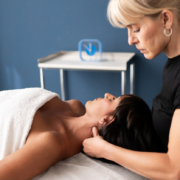
massage therapy for neck pain

Massage Therapy for Neck Pain and Tension Headaches

October 6, 2026/0 Comments/in Massage /by Dr. Kent Ferguson

What Does Massage Research Say?

Neck tension has a way of shrinking your day. Turning to check traffic becomes awkward, computer work feels harder, and an evening workout may seem less appealing. If you are considering massage therapy for neck pain, the useful question is not whether massage is a miracle solution. It is whether hands-on care could help you feel and move more comfortably as part of an appropriate plan.

That distinction matters. Neck pain can arise from many sources, including irritated joints, sensitive muscles, an injury, repetitive workload, poor recovery, or pain referred from another area. Massage cannot diagnose or correct every cause. Research does suggest that it may provide short-term relief for some people, especially when muscle tension or protective guarding contributes to their symptoms.

At Oliver Chiropractic Wellness Clinic in downtown Edmonton, a registered massage therapist begins by learning what you feel, when it occurs, and how it affects your life. Your session can then be adapted to your goals rather than following a one-size-fits-all routine.

What Is Therapeutic Massage?

Therapeutic massage uses hands-on techniques to work with muscles and other soft tissues. Depending on your assessment, preferences, and health history, treatment may include Swedish massage, manual deep-tissue work, cupping, hot stone massage, or instrument-assisted techniques such as Graston.

The word “therapeutic” does not mean the treatment must feel intense. Effective pressure is pressure you can tolerate without bracing, holding your breath, or feeling that you need to endure the session. A lighter Swedish approach may suit someone seeking general relaxation. Focused manual work may be appropriate when a particular muscle group feels tight or overworked. Cupping, hot stones, or Graston may be considered when they fit the therapist’s assessment and the patient’s preferences.

Treatment should remain collaborative. You can ask questions, change the pressure, decline a technique, or request that an area not be treated at any time.

Massage Therapy for Neck Pain: What the Evidence Shows

Research on massage and neck pain presents a more nuanced picture than many online benefit lists suggest. A 2024 Cochrane review concluded that massage probably makes little to no difference in pain, function, or health-related quality of life compared with a placebo for subacute or persistent neck pain at up to 12 weeks. The authors rated much of the evidence as low certainty.

Another 2024 systematic review included 42 studies and 2,656 participants. Its results varied according to the treatment used for comparison, and the authors noted problems such as imprecision and a high risk of bias in many trials. In plain language, some people and some study groups improved, but the research does not support promising the same result to everyone.

This does not make massage irrelevant. It tells us to use it for realistic goals: easing symptoms, reducing the sense of tightness, making movement more comfortable, and helping a patient participate in exercise or daily activity. Your response to care matters more than a sweeping claim.

Why Neck Discomfort Is Rarely Caused by One Muscle

The neck works as part of a larger system. The upper back, shoulder blades, chest, jaw, breathing pattern, workload, sleep, and stress response can all influence how the area feels. A person who spends hours at a computer may develop fatigue through the neck and shoulders, but posture alone does not explain every case of pain.

Protective muscle guarding can also continue after an initial irritation. Your nervous system may treat certain movements as threatening, causing muscles to tighten before you reach the end of a comfortable range. A massage therapist can assess the surrounding soft tissues while respecting the possibility that the source may require evaluation by another health professional.

Massage Therapy for Neck Pain Compared With Other Active Treatments

Massage has not consistently outperformed exercise or other active treatments in clinical research. That comparison is important because long-term improvement often requires more than time on a treatment table.

A practical care plan may combine short-term symptom relief with exercises that build strength, tolerance, and confidence in movement. Massage may help create a more comfortable window in which to move. Exercise can then help you develop the capacity needed for work, recreation, and daily tasks. The two approaches have different jobs, and they do not need to compete.

How Muscle Tension Can Affect Daily Movement

Muscle tension is not automatically harmful. Muscles contract whenever you work, stabilize a joint, lift a bag, or hold your head upright. The problem arises when tension becomes uncomfortable, persistent, or limiting.

Guarding, Stiffness and Sensitivity Around the Neck and Shoulders

A tense area may feel hard, tender, tired, or unusually sensitive to pressure. You might notice discomfort across the upper shoulders, between the shoulder blades, or near the base of the skull. Some people feel worse after a long period of stillness; others notice symptoms after unfamiliar activity or a demanding workout.

Hands-on treatment may temporarily change how tender or restricted an area feels. That change can make it easier to turn your head, reach overhead, or settle into a more comfortable resting position. The effect does not prove that tissue was “broken up” or that toxins were released. A more responsible explanation is that touch, pressure, movement, expectations, and the nervous system can influence the experience of pain and muscle tone.

When Restricted Movement Begins Changing Everyday Habits

Small adaptations can accumulate. You may rotate your whole torso instead of turning your neck, avoid one side while carrying groceries, skip a favourite activity, or constantly reposition at your desk. These strategies can be reasonable for a short time, but ongoing avoidance may reduce confidence and capacity.

Useful progress is therefore not limited to a pain score. It might mean checking your blind spot more easily, completing a workday with fewer interruptions, sleeping in a preferred position, or returning to strength training with an appropriate plan.

Tension-Type Headaches and Tight Neck Muscles

Headaches deserve careful assessment because they have many possible causes. Massage may be considered when a clinician has identified a tension-type pattern or when neck and shoulder tension accompanies a familiar headache. It should not be used to explain away a new, severe, or unusual headache.

Common Features of a Tension-Type Headache

Tension-type headaches are often described as pressure or tightness rather than pulsing pain. They may affect both sides of the head and can occur with tenderness in the scalp, neck, or shoulders. Symptoms and triggers vary, so a label based only on how a headache feels may be unreliable.

A systematic review and meta-analysis published in 2021 found that manual therapy may have positive effects on the pain intensity and frequency of tension-type headaches. The authors also stressed that more studies are needed to strengthen the evidence. This supports a measured “may help” rather than a guarantee.

Massage Therapy for Neck Pain and Associated Headache Patterns

When neck tension and a familiar headache occur together, an RMT may assess the upper shoulders, upper back, muscles near the base of the skull, and jaw-related tension when appropriate. Treatment should be adjusted to your comfort because aggressive pressure around a sensitive neck can make some people feel worse.

Track outcomes that matter: headache frequency, intensity, medication use, sleep interruption, and ability to work or exercise. If there is no meaningful improvement after a reasonable trial, your care plan should be reconsidered.

Seek urgent medical care for a sudden “worst headache,” a headache after significant trauma, or a headache accompanied by weakness, confusion, fainting, fever, a stiff neck, vision loss, chest pain, or other alarming symptoms.

Can Massage Improve Mobility?

Many patients use “flexibility” and “mobility” interchangeably, but they are not quite the same. Flexibility describes how far a tissue or joint can be moved. Mobility also involves control, coordination, comfort, and confidence within that range.

Measuring Useful Change in Comfort and Range of Motion

Before and after a session, your therapist may ask you to turn, bend, reach, or perform another relevant movement. A small change can be worthwhile if it improves a meaningful task. It is less useful to chase a dramatic range-of-motion number that does not carry into daily life.

Short-term changes also need context. If movement improves for only a few hours, that information can guide the next step. You may need a different technique, a modified appointment schedule, an exercise progression, ergonomic changes, or assessment by another provider.

Why Massage May Work Best Alongside Exercise and Movement

Movement gives your body a chance to use the comfortable range available after treatment. Your therapist may suggest gentle exercises, regular position changes, or a gradual return to activity. These recommendations should match your symptoms and abilities rather than relying on rigid posture rules.

Massage is not a substitute for strength, cardiovascular activity, sufficient sleep, or medical care when those are needed. It can be one component of a broader strategy built around the activities you want to maintain.

Who May Benefit From a Massage Assessment?

An individualized assessment may be useful for:

  • Office workers with recurring neck and shoulder tension.
  • Drivers who feel stiff after prolonged sitting.
  • Recreational athletes managing training-related tightness.
  • People who notice muscle guarding during stressful periods.
  • Patients following a coordinated chiropractic, rehabilitation, or exercise plan.
  • People seeking maintenance care after a previous issue has settled

Massage is not appropriate in every circumstance. Tell your RMT about medications, recent surgery, pregnancy, osteoporosis, blood-clotting concerns, skin infections, fractures, cancer treatment, fever, new neurological symptoms, or other relevant health conditions. The therapist may modify treatment, avoid an area, or recommend medical clearance.

Progressive arm or leg weakness, numbness, loss of coordination, unexplained weight loss, fever, severe night pain, bowel or bladder changes, or symptoms after significant trauma require prompt medical assessment. Chest pain, shortness of breath, stroke-like symptoms, or a sudden severe headache require emergency care.

What to Expect From an Individualized Treatment

Your first appointment should begin with a health history and a conversation about your goals. Be specific. “I want to turn my head more comfortably while driving” gives your therapist more useful direction than “my neck is tight.”

Your RMT may assess relevant movements and explain the proposed approach. OCWC offers Swedish massage, manual deep-tissue techniques, cupping, hot stone massage, and Graston. Not every technique is suitable for every person or every visit. Selection depends on the assessment, your health history, your response, and your informed consent.

During treatment, communicate if the pressure feels too strong, you experience numbness or sharp pain, or you simply want something changed. Afterward, mild temporary tenderness can occur, but severe or worsening symptoms should be reported. Your therapist can discuss what to monitor and whether another appointment makes sense.

There is no universal treatment frequency. Someone with a recent flare may choose a short trial followed by reassessment. Another person may book occasional maintenance visits because the sessions help them stay comfortable during a demanding work or training schedule. The right interval should reflect your goals, response, budget, and overall plan.

Is Massage Therapy for Neck Pain Worth Considering?

Massage is not a cure-all, and the research does not justify guaranteed results. It may still provide meaningful short-term support when muscle tension, tenderness, or guarding contributes to your discomfort. The most useful approach combines honest expectations, individualized care, and regular reassessment.

If neck or shoulder tension is interfering with work, driving, exercise, or rest, talk with a registered massage therapist about whether treatment fits your needs. Oliver Chiropractic Wellness Clinic offers Swedish massage, manual deep-tissue work, cupping, hot stone massage, and Graston in downtown Edmonton.

Ready to get started? Book your appointment online with Oliver Chiropractic Wellness Clinic.

chiropractic care after a car accident

Chiropractic Care After a Car Accident

October 4, 2026/0 Comments/in Chiropractic Blog /by Dr. Kent Ferguson

5 Reasons to Consider It

A collision can disrupt far more than your commute. It may change how comfortably you turn your head, sleep, work at a computer, lift a child, or check a blind spot. Chiropractic care after a car accident gives you an opportunity to have those concerns assessed, understand your options, and build a recovery plan around the activities that matter to you. It is not a one-size-fits-all solution, and it should never replace emergency care when serious symptoms are present. For many people with stable muscle and joint complaints, however, a chiropractic assessment can be a practical starting point.

Even a seemingly straightforward collision can leave you uncertain about what to do next. Some people feel sore immediately. Others first notice stiffness, headache, shoulder tension, or limited movement later that day or over the next few days. The timing and intensity of symptoms do not tell the whole story, which is why a proper examination matters more than guessing from the condition of the vehicle or comparing your experience with someone else’s.

At Oliver Chiropractic Wellness Clinic, a chiropractor assesses each new patient before recommending care. The resulting treatment plan is informed by the examination and shaped around the patient’s particular concerns, health history, comfort level, and goals. Depending on the findings, the plan may include chiropractic treatment, rehabilitation exercises, an in-house referral for massage therapy or acupuncture, or a referral to a physical therapist when necessary.

What Happens to Your Body During a Vehicle Collision?

A vehicle can stop or change direction faster than the body can adapt. The head, neck, trunk, and limbs may move at different moments, placing sudden demand on muscles, joints, ligaments, and other soft tissues. A rear impact is one possible cause, but side impacts, angled collisions, and abrupt braking can also produce discomfort. Seat position, head-restraint position, whether you anticipated the impact, previous injuries, and your general health may influence how you feel afterward.

The familiar term whiplash describes a rapid acceleration-and-deceleration movement of the neck. Clinicians may use a broader diagnosis such as a neck pain-associated or collision-related disorder after considering the symptoms and examination findings. The label matters less than identifying what is limiting you, screening for concerns that need medical attention, and choosing care that fits the clinical picture.

Why Symptoms May Not Be Obvious Immediately

The first minutes after a crash can be noisy, stressful, and full of decisions. Adrenaline, shock, distraction, and concern for other people can make it difficult to notice every physical change. Irritated tissues may also feel different as the hours pass and normal activities resume. You might discover the problem when you reach for something, sit through a meeting, wake during the night, or try to drive the next morning.

Delayed discomfort does not automatically mean that serious damage was hidden, but new or worsening symptoms deserve attention. Keep a simple record of when symptoms began, what movements aggravate them, and how they affect sleep, work, driving, exercise, or household tasks. This information can help the examining practitioner understand the pattern and establish a useful baseline.

Five Reasons People Consider Chiropractic Care After a Car Accident

A focused musculoskeletal assessment.

A chiropractor can review the collision, your health history, current symptoms, and functional limitations. The examination may include posture and movement observation, range-of-motion testing, palpation, orthopaedic testing, and a neurological screen. Findings that fall outside the chiropractor’s scope or suggest a more serious condition should lead to referral or co-management.

A plan built around the individual.

Two people in similar collisions may need different approaches. One may be limited mainly by neck rotation; another may have upper-back stiffness, jaw tension, headaches, or low-back discomfort. Treatment should reflect the examination, the patient’s preferences, and realistic goals rather than follow a preset number of visits or techniques.

Support for restoring comfortable movement.

When clinically appropriate, care may use joint mobilization or manipulation, soft-tissue methods, education, and gradual movement. The objective is not to force a painful area back into place. It is to help the patient tolerate movement, improve function, and return to daily activities at a sensible pace.

Practical strategies between visits.

What happens outside the clinic often matters as much as what happens during an appointment. A chiropractor may recommend rehabilitation exercises, activity modifications, pacing strategies, or ergonomic changes. Instructions should be specific enough that you know what to do, how often to do it, and what response means you should stop and contact the clinic.

Progress that can be reviewed and adjusted.

Recovery rarely follows a perfectly straight line. OCWC uses re-examinations to measure whether the patient is improving. Changes in range of motion, activity tolerance, symptom behaviour, sleep, work capacity, and other meaningful goals can help the chiropractor decide whether to continue, modify, broaden, or conclude the plan.

How Chiropractic Care After a Car Accident May Support Mobility

Chiropractic care involves more than a single technique. After assessing the patient and discussing consent, a chiropractor may choose gentle mobilization, an adjustment, soft-tissue work, movement coaching, or exercise. The selected approach should account for symptom irritability, examination findings, previous health conditions, medications, and the patient’s comfort with each option.

Evidence-informed guidelines for neck pain and collision-related disorders commonly emphasize multimodal care. That means combining suitable hands-on care with education, exercise, and self-management rather than expecting one intervention to do all the work. Recommendations in this field vary in strength, so an honest treatment conversation should include expected benefits, possible risks, alternatives, and the option to decline or modify a technique.

Some patients may benefit from another discipline as part of the plan. OCWC can refer patients in-house for massage therapy or acupuncture when those services fit the patient’s needs. Rehabilitation exercises may be provided, and a referral to a physical therapist may occur when necessary. Coordinated care should have a clear purpose: helping the patient reach agreed functional goals without adding services simply for the sake of doing more.

What Safe, Individualized Collision Care Should Include

A good first appointment should feel thorough, clear, and collaborative. Expect questions about the direction and timing of the impact, your position in the vehicle, immediate and delayed symptoms, previous injuries, current medical conditions, medications, and the activities you are struggling to perform. Bring any relevant reports and a medication list. If another practitioner has already assessed you, share what you were told and any restrictions you received.

The chiropractor should explain the examination findings in plain language. If treatment is appropriate, you should understand what is being recommended, why it may help, what alternatives exist, and how progress will be evaluated. Ask how many visits are proposed before the first re-examination rather than assuming the initial schedule will continue indefinitely. A plan can change as your response becomes clearer.

Imaging is not automatic after every collision. The decision to request or refer for imaging depends on the history, examination, validated clinical rules, and whether the result is likely to change management. A responsible provider will also recognize when symptoms require urgent medical assessment or input from another health professional before hands-on care begins.

When Emergency Medical Assessment Comes First

Seek urgent medical assessment for serious or worsening symptoms such as loss of consciousness, repeated vomiting, marked confusion, seizure, severe or rapidly worsening headache, significant weakness or numbness, difficulty speaking, trouble breathing, severe chest or abdominal pain, uncontrolled bleeding, or a suspected fracture. Do not drive yourself if you feel faint, confused, visually impaired, or otherwise unsafe to drive.

Headache, dizziness, nausea, visual changes, balance problems, and difficulty concentrating can occur with a concussion. These symptoms should not automatically be treated as a neck-only complaint. The Public Health Agency of Canada recommends assessment by a doctor or health care provider when concussion is suspected. Chiropractic care may be considered later for suitable musculoskeletal concerns, but emergency and medical priorities come first.

Building a Recovery Plan Around Your Daily Life

Pain intensity is useful, but it is only one measure. A meaningful plan also considers what you need to regain: looking over your shoulder while driving, completing a workday with fewer interruptions, sleeping more comfortably, returning to the gym, carrying groceries, or playing with your children. These activities turn a vague goal such as “feel better” into outcomes that can be discussed and rechecked.

Early recovery often requires balance. Complete inactivity can make some people feel stiffer, while pushing through sharp or escalating symptoms may aggravate the problem. Follow the advice given after your assessment. Use prescribed exercises as directed, change positions regularly, pace demanding tasks, and report any unexpected response. The right amount of activity depends on the person and may change as recovery progresses.

The administrative side can also add stress. OCWC keeps motor vehicle accident forms available in the office and can direct bill eligible care through a patient’s MVA claim. Coverage and claim requirements depend on current Alberta rules, the injury classification, the insurer, and the individual claim. Patients should confirm details with their adjuster and provide requested forms promptly. The Government of Alberta advises injured people to see a primary health care practitioner for assessment and to complete the applicable claim steps.

Questions to Ask Before Beginning Treatment

A short list of questions can make the care discussion more useful:

  • What did the assessment identify, and is there anything that requires medical referral?
  • Which treatment options are being recommended, and what are the alternatives?
  • What benefits and risks should I understand before consenting?
  • Which activities should I continue, modify, or temporarily avoid?
  • What exercises should I do, and what response means I should stop?
  • When will my progress be re-examined, and which measures will be compared?
  • Could massage therapy, acupuncture, or physical therapy have a useful role in my plan?
  • What forms or insurer information should I bring for direct billing?

Clear answers help you participate in decisions instead of feeling as though recovery is simply happening to you. They also make it easier to notice whether the plan still matches your needs.

Take the Next Step With a Personalized Assessment

There is no universal timetable after a collision. The most useful next step is an assessment that considers your symptoms, health history, daily demands, and recovery goals. From there, care can remain focused, measurable, and responsive to your progress.

If you are dealing with stable muscle or joint symptoms after a motor vehicle collision, book an appointment online with Oliver Chiropractic Wellness Clinic. A chiropractor will assess your concerns, explain the findings, and discuss an informed treatment plan tailored to you. Book online with OCWC.

Book an Appointment

We respect your time and budget. Our appointments are efficient, flexible, and support a variety of payment options. Book an appointment for you or your family today by calling 780-455-2112.


Book online

Recent Blogs

  • Massage Therapy for Neck Pain and Tension Headaches
  • Chiropractic Care After a Car Accident
  • Acupuncture and Anxiety in Edmonton
  • RAPID NeuroFascial Release Therapy
  • Edmonton Deep Tissue Massage

CONTACT US

10324 112 Street NW
Edmonton, AB T5K 1N1

1-780-455-2112
info@ocwc.ca

  • Facebook
  • Twitter
  • Youtube
  • Yelp

OFFICE HOURS

MONDAY – THURSDAY
8:00am – 6:00pm

FRIDAY
8:00am – 4:00pm

SATURDAYS & EVENINGS
By appointment only

SUNDAY
Closed

LEARN MORE

  • CHIROPRACTIC
  • MASSAGE
  • ACUPUNCTURE
  • SHOCKWAVE THERAPY
  • FACIAL ACUPUNCTURE

RESOURCES

  • NEW PATIENTS
  • FAQ
  • PRIVACY POLICY
© Copyright - Oliver Chiropractic Wellness Clinic - powered by Enfold WordPress Theme
  • Why OCWC
  • Services
  • New Patients
  • Blog
  • Contact
  • Book Online
Scroll to top