
• Book Online
(780) 455-2112 | info@ocwc.ca
Oliver Chiropractic Wellness Clinic
  • Why OCWC
    • About Us
    • Our Team
    • Client Reviews
  • Services
    • Chiropractic
    • Massage
    • Custom Orthotics
    • Cupping Therapy
    • Hot Stone Massage Therapy
    • RAPID NeuroFascial Release Therapy
    • Graston Technique
    • Manual Lymphatic Drainage
    • Craniosacral Massage Therapy
    • Stretch Therapy
    • Acupuncture (General)
    • Acupuncture (Facial)
    • Shockwave Therapy
    • Manual Osteopoathy
    • FAQ
  • New Patients
    • What to Expect
    • Forms
      • OCWC Cancelation/Financial Policy
  • Blog
  • Contact
    • General Inquiries
  • Book Online
  • Menu Menu
You are here: Home1 / Chiropractic Benefits

Posts

Iliotibial Band Syndrome Chiropractic Benefits

How Chiropractic Helps Those That Suffer from Iliotibial Band Syndrome

August 12, 2019/0 Comments/in Chiropractic, Chiropractic Blog /by Dr. Kent Ferguson

Iliotibial band syndrome is a very common injury among runners. If it is diagnosed early and treatment commences immediately, the chances of it becoming a chronic condition are reduced. It responds very well to chiropractic since it involves the pelvis and related muscles. When pelvic mechanics are not functioning properly, the muscle don’t work efficiently which hinders flexibility and mobility. This can lead to tight muscles which may inhibit motion and cause pain. Chiropractic adjustments have been proven to help with the condition.

What is the Iliotibial Band?

The Iliotibial Band, or fasciae latae, is the outer casing of muscle that extends along the outer thigh, from the top of the hip to the outside of the knee. Iliotibial band syndrome occurs when that casing becomes thickened. It is flexed or tight when you stand; it is what keeps your leg straight, allowing the larger thigh muscle to rest.

There are two primary muscles that are involved in iliotibial band syndrome, the buttock muscle, or gluteus maximus, and the tensor fasciae latae muscles. Sometimes Iliotibial Band Syndrome is referred to Tensor Fasciae Latae Syndrome and the two terms can be used interchangeably.

Iliotibial Band Syndrome Defined

As the iliotibial band thickens it pulls in the area where it connects to the knee. This results in knee pain due to the application of too much pressure on the bursa. The bursa then becomes swollen, inflamed, and painful. During activity, such as running on an incline, the glutes are heavily involved.

The other end of the iliotibial band is inserted at the glutes so as the band tightens from this activity, it can trigger iliotibial band syndrome pain. Repeated activity further aggravates it, as does running on tight indoor tracks or uneven roads as well as having collapsed arches or running in inferior or worn out running shoes.

Symptoms of Iliotibial Band Syndrome

There are several symptoms that can be used to diagnose iliotibial band syndrome. Lateral knee pain (pain on the outside of the knee) is a primary symptom and often used as a key diagnostic tool. Few conditions involve lateral knee pain. Other symptoms include:

  • Pain that worsens after running, particularly after running on an incline, climbing stairs, or climbing hills
  • There may not be any pain until you do something that aggravates it like climbing a hill.
  • The pain may not begin until you are mid-way through a run.
  • The pain can be intense and debilitating.
  • It can accompany a snapping hip, which occurs when the muscles that cross the outer hip may click or snap while running or walking.
  • The pain may be present along the lateral thigh without incorporating the knee, but it is only in very rare instances that it is concentrated on the gluteal or hip muscles.

Iliotibial band syndrome is often attributed to over training. This can mean suddenly increasing hill repeats or doubling your mileage.

Treatments for Iliotibial Band Syndrome

If your iliotibial band syndrome is caused by a problem with pelvic function, relieving the pain from the condition can be difficult. Stretching is not likely to bring relief – and if it does it won’t last long. If the pain from iliotibial band syndrome lasts for more than two weeks even if you are only stretching, your regular exercise routine, and ice and you don’t see much improvement, a chiropractor can help.

Even if the pain is located in the knee, the problem could originate in the pelvis. A chiropractor can assess your condition, check to see that your pelvis is functioning properly. If it isn’t, spinal adjustments and other chiropractic treatments can bring the body back into alignment and make the pelvis more functional.

Give us a call at (780)455-2112 to schedule your assessment or visit www.ocwc.ca to learn more about our doctors of chiropractic.

Sacroiliac Joint Dysfunction Chiropractic Benefits

What Chiropractic Patients Want to Know About Sacroiliac Joint Dysfunction

August 5, 2019/0 Comments/in Chiropractic, Chiropractic Blog /by Dr. Kent Ferguson

You try to stand up from a seated position and feel a stab of pain in your lower back. It may even shoot through your hip, buttock, or down the back of your thigh. The pain may even get worse then you walk uphill or sit for a long period of time. While these symptoms could mean a pinched nerve, lumbar disc herniation, hip bursitis, or degenerative hip disease, it could also be sacroiliac joint dysfunction.

What is Sacroiliac Joint Dysfunction?

The sacroiliac (SI) joint is located in the pelvis. It is very strong as it is a weight bearing joint connecting the pelvis to the sacrum. It is surrounded by tough ligaments that reinforce it, providing added support.

There is an SI joint located on each side of the sacrum and they work together, moving as a single unit to act as a shock absorber for the spine and for transmitting force of the upper body. Just like any other joint in the body, the SI joint can be injured or diseased, causing it to become unstable and inflamed, causing pain and limited mobility.

What Causes SI Joint Inflammation?

While doctors have not established how the pain is generated, it is believed that it is due to a change in the normal motion of the joint. This could occur due to:

  • Hypermobility (Instability or Too Much Movement) – This can cause the pain to reside in the lower back. It can also be felt in the hip or both the hip and lower back and may even radiate into the groin.
  • Hypomobility (Fixation or Too Little Movement) – This can cause the pain to reside in the lower back or buttocks and may radiate down one leg, usually in the back of the thigh. It usually doesn’t reach the knee, but sometimes can even reach the ankle and foot. In this way, the condition mimics sciatica.

Sacroiliac joint dysfunction typically affects women who are young or middle aged. Older women and men are rarely affected although it does happen.

What are Treatment Options for Sacroiliac Joint Pain?

When SI joint pain is initially diagnosed the treatment is usually fairly conservative. Medication, physical therapy, and injections are used by doctors for pain management.

NSAIDs and other similar medications decrease inflammation and reduce pain, while physical therapy can readjust the SI joint in cases where it is dislocated or immobilized. It also includes exercises that stabilize the joint for pain management over the long term.

Steroid injections directly into the sacroiliac joint can help with the reduction of inflammation and pain while making physical therapy more effective. When steroid injections are effective but the effects are temporary there is another non-surgical treatment that is sometimes used called RFA, or radiofrequency ablation.

In cases where the conservative methods do not achieve the desired results there are surgical options that provide pain reduction and stabilization on a more permanent scale. SI fusion involves fusing the joint, providing relief.

However, there is a treatment option that is non-invasive, doesn’t involve steroids or medications that could have harmful side effects – chiropractic.

Chiropractic for Sacroiliac Joint Pain

There are two chiropractic treatments that are typically used to treat SI joint pain:

  • Spinal manipulation – This is the traditional chiropractic adjustment that is also known as high-velocity, low-amplitude (HVLA) thrust.
  • Spinal mobilization – This is a less forceful, gentle chiropractic adjustment also known as low-velocity, low-amplitude thrust.

Chiropractic is proven to be an effective, non-invasive, gentle method for relieving the pain and inflammation of SI joint dysfunction. No medication, no surgery, just relief.

So if you’ve been suffering from sacroiliac joint dysfunction, give us a call! Our Doctor of Chiropractic is here to help! (780)455-2112 or visit www.ocwc.ca .

Stretches benefits chiropractic

3 Stretches Every Chiropractic Patient Will Appreciate

July 29, 2019/0 Comments/in Chiropractic, Chiropractic Blog /by Dr. Kent Ferguson

Chiropractic is a very effective treatment for back pain, but what many patients don’t realize is that there are things they can do to make it even better. By employing simple stretches, a chiropractic patient can improve his or her range of motion and increase flexibility. These are some great stretches that you can do at just about any fitness level.

Knee to Chest

Lie on a firm, flat surface for this exercise. You can place a mat or towel underneath you to make it a little more comfortable. If you aren’t able to flatten your back right away, fold a small towel and place it under the small of your back to provide a little support.

  1. Lie on your back, knees bent so that your feet are flat on the floor.
  2. Press your lower back into the floor.
  3. While keeping your left foot on the floor, inhale, bringing your right knee to your chest, pulling gently just until you feel a stretch. Hold it for 20 to 30 seconds. You can also keep your left leg straight if that is more comfortable. Make sure you keep your back pressed to the floor.
  4. Exhale, releasing your right knee and return to the starting position.
  5. Repeat the movement with the left leg.
  6. Repeat this stretch 3 to 5 times with each leg.

Child’s Pose

This gives you a very nice stretch all through your back. If you are unable to get on your knees or if you can’t sit on your knees, you can do this while standing.

Hold onto the back of a chair and bend forward. Don’t pull and don’t rest put all of your weight on the chair, just let your body fall gently forward with your neck relaxed and your head drooping. Take baby steps backward until you feel a good stretch, then hold it while breathing normally for 20 to 30 seconds. Walk your feet back in a bit to keep your balance and stand. Repeat 4 or 5 times.

  1. Get on your hands and knees, keeping your knees a little wider than your hips. Turn your toes inward so that they touch.
  2. Bend your knees, pushing your hips back over your heels. Get to a comfortable sitting position.
  3. Slowly slide your arms out in front of you, rounding out your back as you exhale. Keep your neck relaxed so that your head falls forward. Allow yourself to feel the stretch throughout your back.
  4. Hold for 20 to 30 seconds then return to the sitting position.
  5. Repeat the movement 4 or 5 times, keeping your movements slow, fluid, and deliberate.

Cat – Camel

If you can’t get on your knees, stand in front of a chair and place your hands on the seat. Position your feet about where your knees would be if you were on your hands and knees. Relax your neck, allowing your head to droop. Complete steps 2 through 5.

  1. Get on your hands and knees, back straight, your hands shoulder width apart, and your knees slightly apart. Relax your neck so that your head droops. Breathe normally.
  2. Exhale as you round your back up toward the ceiling. Press until you feel a good stretch all along your back. Hold for about 20 to 30 seconds.
  3. Return to the starting position, keeping your back straight.
  4. Inhale as you sway your back, pushing your stomach toward the floor. Tilt your pelvis to get a maximum stretch. Hold for 20 to 30 seconds.
  5. Repeat the full sequence 3 to 5 times.

These stretches coupled with your regular chiropractic adjustments should have you well on your way to moving and feeling better! Visit www.ocwc.ca for more health and wellness tips!

occipital neuralgia chiropractic benefits

What Chiropractic Patients Want To Know About Occipital Neuralgia

July 15, 2019/0 Comments/in Chiropractic, Chiropractic Blog /by Dr. Kent Ferguson

Many headaches that people classify as migraines are actually not migraines at all. Two of the most common headaches confused with migraines are sinus headaches and occipital neuralgia.

The condition can be debilitating but there are treatments, including chiropractic, that are very effective. Understanding occipital neuralgia can help patients better manage it so they can minimize the pain and symptoms of the condition.

What is occipital neuralgia?

Occipital neuralgia is a neurological condition that affects the occipital nerves which run from the top portion of the spinal cord, through the scalp, transmitting messages to and from the brain. There are two greater occipital nerves, one on each side of the head, from between the vertebrae located in the upper neck through the muscles that are located at the base of the skull and back of the head.

While they do not cover the areas on or near the ears or over the face, they can extend over the scalp as far as the forehead. When those nerves are injured or become inflamed, occipital neuralgia is the result. A person with this condition may experience pain at the base of their skull or the back of their head.

What are the symptoms of occipital neuralgia?

Pain is the prevalent symptom of occipital neuralgia. It often mimics the pain of migraine headaches or cluster headaches and is described as throbbing, burning, and aching.

There may also be intermittent shooting or shocking pain. Typically, the pain begins at the base of the skull but may radiate along the side of the scalp or in the back of the head. Other symptoms include:

  • Pain is experienced on one side (but sometimes both sides)
  • Pain behind the eye of the side that is affected
  • Tenderness in the scalp
  • Sensitivity to light
  • Pain triggered by neck movement

What causes occipital neuralgia?

Irritation or pressure to the occipital nerves are what actually cause the pain. This may be due to tight muscles in the neck that squeeze or trap the nerves, injury, or inflammation.

However, much of the time doctors are unable to determine the cause. There are several medical conditions linked to occipital neuralgia:

  • Tight neck muscles
  • Diabetes
  • Trauma or injury to the back of the head
  • Gout
  • Tension in the neck muscles
  • Whiplash
  • Inflammation of the blood vessels in and around the neck
  • Infection
  • Neck tumors
  • Cervical disc disease
  • Osteoarthritis

What are the treatments for occipital neuralgia?

Occipital neuralgia treatment focuses on pain relief. It often begins with conservative treatments that include:

  • Rest
  • Heat
  • Physical therapy
  • Anti-inflammatory over the counter medication
  • Massage
  • Chiropractic

In more severe cases the patient may be prescribed a stronger anti-inflammatory medication, muscle relaxants or in some cases an anticonvulsant medication.

If these therapies are not effective or do not bring about the desired level of pain relief, then doctors may recommend percutaneous nerve blocks and steroids. Sometimes surgery is recommended in cases where the pain is severe, chronic, and is unresponsive to more conservative treatments.

Chiropractic for occipital neuralgia

Chiropractic was once considered an “alternative” treatment for occipital neuralgia, but now it is often a regular part of recommended patient care. The advantage of chiropractic over medication or surgery is that chiropractic does not come with the side effects of drugs or the risks of surgery.

Another advantage is that chiropractic seeks to correct the root of the problem, not just manage the pain like other treatments.

Chiropractic treatment for occipital neuralgia may include lift adjustments, heat, massage, and traction. This will bring the body back into proper alignment and take the pressure off of the nerves as it loosens the neck muscles.

The patient stands a better chance of staying pain free when taking this treatment route.

Give us a call to schedule your appointment with one of our highly skilled chiropractors! (780)455-2112 or visit www.ocwc.ca for more health information and tips!

bulging disc chiropractic benefits

How Chiropractic Helps Heal A Bulging Disc

July 1, 2019/0 Comments/in Chiropractic, Chiropractic Blog /by Dr. Kent Ferguson

Bulging disc is often thought of as a normal part of the aging process. It causes pain and decreases mobility. Athletes and people who have jobs that are very physical are often prone to bulging discs and other disc problems. Smoking tobacco can also be a contributing factor in spinal discs deteriorating and weakening. Chiropractic has been proven to be an effective treatment for bulging disc and the associated pain.

What is a bulging disc?

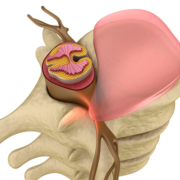
Bulging discs are often thought to be the same as herniated discs but that is incorrect. A herniated disc involves a crack in the disc’s outer layer. This is called an annulus. Typically, a small part of the disc is affected, allowing the soft material that makes up the nucleus pulposus to protrude. This is different from a bulging disc because, unlike a herniated disc, there is no crack. The disc bulges out of the space but it doesn’t crack and no material protrudes. It also affects more area of the disc than a herniated disc.

While a herniated disc is likely more painful, a bulging disc can also cause pain that can increase over time. Symptoms of a bulging disc include:

  • Tingling, numbness, or muscle weakness in one or both legs
  • Changes in bowel or bladder function
  • Hyper reflexivity in one or both legs
  • Paralysis below the waist
  • Deep pain over the shoulder blade or in the shoulder area
  • Pain when moving the neck
  • Radiating pain in the fingers, forearm, and upper arm

A bulging disc is often diagnosed by a combination of several methods. A physical exam, along with a full history of the problem will often lead to tests like MRI, x-ray, and myelogram with CT scan. From there, your doctor will work with you to find the best course of treatment.

Chiropractic for Bulging Disc

Chiropractic is a preferred treatment method for many patients with bulging disc because it is non-invasive and does not involve drugs or injections. Once you have your diagnosis, you and your chiropractor can work together to find the best way to treat your condition.

Your chiropractor will want to verify your diagnosis so you may go through questions about your medical history, a physical examination, and tests that involve nerve function, reflexes, and muscle tone. Your chiropractor may also order MRI or x-ray as well as other diagnostic testing in order to get a better picture of what is going on.

One of the most popular features of chiropractic care is the whole body approach to wellness. Your chiropractor will look at your entire spine, not just the area that is painful. They will treat your entire spine and provide self-care direction, exercise, and nutritional recommendations so that you can continue to progress and live pain free. Your pain and spinal problems could be the result of spinal misalignment so your chiropractor will seek to get to the root of the problem and treat your entire spine so that you have less pain, your spine can heal, and you have better mobility.

Through focused chiropractic adjustments, your chiropractor will gently use low force techniques to relieve the painful symptoms by manipulating your spine around and at the disc that is bulging. They may use other types of treatments depending on your specific condition and other issues that may be exacerbating your problem.

Chiropractic for bulging discs is safe, effective, and long lasting. If you are having back pain from a bulging disc, you owe it to yourself to seek quality chiropractic care so that you can enjoy less pain, improved mobility, and better quality of life.

Give us a call at (780)455-2112 to book your initial assessment. To learn more about our doctors, visit www.ocwc.ca .

patellofemoral chiropractic benefits

How Chiropractic Helps Resolve Patellofemoral Pain Syndrome

June 24, 2019/1 Comment/in Chiropractic, Chiropractic Blog /by Dr. Kent Ferguson

As the weather warms and spring is in full swing, more and more runners are heading outside, hitting the pavement to train for upcoming races or to just step up their game after a long winter. While there are some die hard runners who don’t let even the most brutal winter stop them, most tend to retreat indoors, waiting for warmer days and a more pleasant environment. Unfortunately, increased activity can also lead to an increased risk of injury, particularly patellofemoral pain syndrome (PFPS), also known as runner’s knee.

What is Patellofemoral Pain Syndrome?

Runner’s knee is often used to describe PFPS, but runner’s knee is actually a broader term describing several different knee injuries or ailments. PFPS is a painful condition that is caused when the tissue that is between the femur (thigh bone) and the patella (kneecap) becomes inflamed or irritated.

Most people will notice pain in the front portion or anterior part of the knee, but pain can be experienced in other parts of the knee and even back pain may occur. Running increases the discomfort, as does sitting for long periods and going up or down stairs.

The causes of PFPS can also vary widely. Overuse is often the first thing that people think, but a problem with the way the knee is aligned is actually the most common reason.

If the patella is not properly aligned, when it moves through the groove that is at the end of the femur, it causes irritation to the surrounding tissues. This usually happens because the muscles and joints are out of balance.

For instance, if the quad muscle on one side is weaker than the other side it throws the entire system out of balance, causing the knee to become misaligned. This leads to knee pain and discomfort.

Treatment for Runner’s Knee

When treating PFPS, rest is usually first on the list, followed by icing the area to reduce inflammation. Once the pain is under control, the next step is to determine what is causing the problem. It is important to rule out more serious conditions or injuries first in order to determine the best course of treatment.

If it is indeed PFPS, strengthening the muscles in and around the knee is generally the first step in treatment. It is important that the muscle strength is balanced so that the knee can be properly aligned. Getting a good pair of running shoes is also recommended so that future injury can be prevented.

Chiropractic for Runner’s Knee

Runner’s knee, or PFPS, responds very well to chiropractic treatment. The chiropractor is able to do a complete exam and find the cause of the problem, then tailor the treatment accordingly. This is typically done on a case by case basis with treatment that is based on the individual’s unique needs. The chiropractor may do various chiropractic alignments and manipulations on the spine, hip, ankle, and knee in order to bring the body back into proper balance.

The chiropractor may also recommend other complimentary treatments including special supplements, dietary adjustments, and an exercise plan. The chiropractor may also recommend certain stretching exercises to aid in healing. Kinesio taping is another common treatment that may be used in conjunction with chiropractic care. It is particularly beneficial when there is a muscular strength imbalance. The tape can help support the weaker muscle group.

Chiropractic care is a very effective treatment for patellofemoral pain syndrome and the associated knee pain. It works to correct the problem by bringing the body back into proper alignment, allowing it to function as it should.

Call (780)455-2112 to book your assessment or visit www.ocwc.ca to learn more about our clinic and practitioners!

posture chiropractic benefits tips

4 Posture Tips Every Chiropractic Patient Can Use

June 3, 2019/0 Comments/in Chiropractic, Chiropractic Blog /by Dr. Kent Ferguson

Good posture is more important than many people realize. Many a mother has followed her child around, reminding him or her to “stand up straight!” Not everyone knows all the reasons that this is important, but they should. Good posture is essential to good spinal health as well as good overall health.

People with good posture sleep better, feel better, and have fewer aches and pains in the joints, back, neck, and head. It helps you have better digestion, improves your organ function, and helps to make your chiropractic treatments even more effective. These top posture tips will help you stand straight and tall while enjoying better health.

Be aware

Being aware of poor posture is the first step in being able to correct it. When you feel your spine starts to curve, your shoulders hunch, or your back sway, stop and take a moment to pull your body back into proper alignment. Pretend that there is a string that goes through your entire body from the top of your head.

In your mind, pull that string up, raising your chin slightly so that it is parallel to the floor. Pull your shoulders back and allow your arms to hang naturally at your side. Bend your knees slightly (soft knees) with your feet about shoulder width apart. Tuck in your stomach and roll your pelvis forward so your back is not swayed. Keep your weight mostly on the balls of your feet. Think tall. Take deep breaths and allow yourself to get an idea of what this, good posture, feels like.

Use the wall

Using the wall or floor can help you get a feel for how to shift your pelvis. If you have a habit of tilting your pelvis back so that you have a sway back, you need to learn how to roll it forward to get it straight.

A person can develop a sway back out of habit, due to injury, or if they carry a lot of abdominal fat. It can cause a great deal of pain and just making the adjustment to straighten your spine will make a tremendous difference.

To get the feel for straightening your back, stand flat against a wall. Keep your feet directly under you. Now try to press the small of your back into the wall. Feel how your body shifts as your pelvis rolls forward. Pay attention to that sensation so you can duplicate it without using the wall. You can also do this while lying on your back with your knees slightly bent. Practice arching your back and then pressing it against the floor to get a feel for that motion.

Stay active

Regular exercise and stretching are very important for good posture. What many people don’t realize, though, is that good posture is absolutely vital while you are exercising. This is called “form.” You need to practice good form while you are doing weight bearing exercises, cardio, and stretching. If you don’t it can lead to injury or pain.

Your chiropractor can advise you on various exercises and the proper form for them. If you work out at a gym or at home, learn about good form for the exercises that you do. Fitness professionals can help you with this and are well worth the investment.

Get Regular Chiropractic Treatment

Chiropractic treatments can help correct poor posture, but even if you are working on it yourself it is important to get regular chiropractic care. There are several reasons for this. First, your chiropractor can make adjustments to your spine, providing you with a much wider range of motion and better mobility. Your chiropractor can also recommend exercises for you and show you how to do them properly. If you have weight issues he or she can provide you with advice on diet and lifestyle changes. Taking advantage of the whole body wellness that chiropractic offers will not only improve your posture, it will improve your life.

It’s never too late to correct your posture, give our clinic a call at (780)455-2112 to book your assessment with one of our wellness chiropractors. Visit www.ocwc.ca to learn more about us!

tension headaches chiropractic benefits

What Chiropractic Patients Want to Know About Tension Headaches

May 27, 2019/0 Comments/in Chiropractic, Chiropractic Blog /by Dr. Kent Ferguson

Tension headaches are the most prevalent types of headaches, occurring more often in women than in men. Research shows that 48 percent of women and 38 percent of men suffer from tension headaches.

Each year, patients spend more than $2 billion on over the counter headache medications. In fact, people spend a lot of money and effort seeking remedies for headaches. From prescription medication to over the counter drugs to alternative headache treatments like meditation, acupuncture, and chiropractic.

In fact, chiropractic is a proven treatment for tension headaches, but there is more to it than just adjustments. Chiropractic offers a whole body approach to treatment that can not only relieve the pain of tension headaches, but help prevent them as well.

What are Tension Headaches?

The most common type of headache is the tension headache which is described as pain ranging from mild to moderate that feels like a tight band is wrapped around the head. While stress can be a factor in the cause of these headaches, it still isn’t well understood how these headaches originate. Symptoms of a tension headache include:

  • Aching, dull pain in the head
  • Sensation of pressure or tightness on the back and sides of the head or across the forehead
  • Tenderness in the shoulder muscles, neck, and scalp

There are two categories of tension headaches: chronic and episodic. There are two primary factors that identify each type. The length of the headache and the frequency can help you determine which type of tension headache you have.

  • Chronic Tension Headaches
    • Length of Headache – hours and can be continuous
    • Frequency of Headache – occur 15 days or more a month for three or more months
  • Episodic Tension Headaches
    • Length of Headache – half hour to a week
    • Frequency of Headache – occur less than 15 days a month for three or more months

There are two primary risk factors for tension headaches:

  • Women – Research shows that nearly 90 percent of women will experience tension headaches throughout the course of their life. Only 70 percent of men will experience tension headaches in their lifetime.
  • Middle Age – Tension headaches increase as people approach 40 and peak at middle age, or when a person is in their 40s. However, anyone can get a tension headache, regardless of age.

Lifestyle Changes to Treat Tension Headaches

A chiropractor can treat tension headaches through traditional spinal manipulation and adjustments, but they also provide advice on lifestyle and nutrition. Several things that your chiropractor may suggest include applying heat or ice to the area around your neck, shoulders, or head. A warm bath or shower may also help.

Stress management is another way that you can learn to manage and prevent tension headaches. This is typically a combination of minimizing stress in your life and learning relaxation techniques. Your chiropractor may also help you improve your posture. Poor posture is a very common contributing factor for many types of headaches.

Chiropractic for Tension Headaches

Your Doctor of Chiropractic will sit down with you to discuss your history, including your headaches. He or she will conduct diagnostic tests including x-rays, MRIs and other to determine if there are underlying causes for your headaches. They will recommend various lifestyle changes including dietary changes and exercises that you can do.

Your doctor may also perform chiropractic adjustments, or spinal manipulation which will help return the body to proper balance, improving spinal function and alleviating stress on the body and system. This helps to relieve pain as an immediate treatment, but when performed consistently, chiropractic can also help prevent tension headaches, allowing you to live pain free.

cyclists chiropractic benefits fitness

How Chiropractic Benefits Cyclists

May 6, 2019/0 Comments/in Chiropractic, Chiropractic Blog /by Dr. Kent Ferguson

Now that summer is upon us and the chilly winds of winter are gone for at least a few months, more people are taking their fitness and recreational activities outside. Cycling is popular activity that fits both bills. It is a great way to unwind and enjoy the great outdoors, but it is also an excellent form of exercise.

Chiropractic provides excellent benefits to cyclists, whether you hit the trails on the weekend, incorporate cycling as part of your fitness regimen, or commute to work on your bike every day.

  • Relief from Pain
  • Faster Healing from Injuries
  • Better Muscle Tone and Balance
  • Improved Range of Motion
  • Enriched Cycling Biomechanics

In short, chiropractic and help make you a better cyclist and help you get the most out of your cycling. It will help keep your body aligned and balanced physically, but it also treats the whole body.

That means that your chiropractor will also make nutritional recommendations and even recommend various supplements if necessary. This will give your energy a boost and improve your performance, while helping you stay healthy and fit. This is how chiropractic helps you have more stamina and endurance.

Chiropractic for Cycling Injuries

As with any type of physical activity, there is always a chance that injuries will occur. Chiropractic helps keep your body balanced and improves your flexibility. This, in turn, decreases your chance for injury.

However, if you are injured, chiropractic can help you recover and heal much faster. You start with a healthy, balanced body through regular chiropractic care, and that helps you bounce back faster if you sustain an injury.

Chiropractic care can also be used to treat injuries. Cycling can cause pain and injury in the ligaments, muscles, knees, ankles, hips, hands, wrists, feet, neck, back, and shoulders.

Regular adjustments can help decrease the likelihood of pain in these areas, but sometimes the soreness can creep in anyway. When that happens, chiropractic treatments have been shown to be very effective in treating pain without pain medication and associated harmful side effects.

Spinal alignment is one of the most common chiropractic techniques, but it goes much farther than that. Adjustments to the legs and feet can help with ankle, knee, hip, and foot pain. Adjustments to the arms and shoulders can help relieve pain in those areas. Special attention to the joints help keep them flexible and functioning as they should.

Chiropractic allows the Body’s Natural Ability to Heal

Chiropractic is completely natural and does not rely on invasive treatments or surgeries. It does not use medications of any kind. It uses nutrition and supplements that rely on the body’s natural ability to heal. It simply realigns the body so that the neural pathways are unobstructed. This allows blood flow to be more efficient and reach the organs much easier.

Chiropractic involves gentle spinal manipulations that realign the body and restore movement in the joints as well as muscle trigger points and soft tissue. It may include electrical muscular current therapies, massage, cold laser therapy, ultrasonic waves, and other therapies in addition to the spinal manipulations.

A chiropractic patient may be advised to rest, ice an area, elevate it, or be given specific exercises to work that area. Chiropractic is not a rote therapy as many traditional medical practices tend to be. It adjusts to each patient, taking into account their unique lifestyle, activity level, nutritional needs, and other elements that influence that particular patient’s healing process.

Chiropractic sees each patient as individual and treat them as such. This is what makes it such an effective treatment for cyclists. The benefits it offers them can not only keep them pain free and participating in their activity; it can also make them better at it.

Visit www.ocwc.ca to learn more about our chiropractors or call (780)455-2112 to book your assessment!

facet syndrome pain

How Chiropractic Helps Relieve Pain From Facet Syndrome

February 4, 2019/1 Comment/in Chiropractic, Chiropractic Blog /by Dr. Kent Ferguson

Facet syndrome, also called facet joint sprain or facet joint syndrome is a common cause of back pain. There are many treatments that are used, but most mainstream medical treatments involve pain medication which can have undesirable side effects and may even lead to addiction.

Chiropractic is a proven, reliable treatment for relieving the pain and discomfort of facet syndrome. It helps restore mobility and flexibility while providing pain relief. Some patient notice significant relief from the pain and inflammation of this condition with chiropractic treatment and it is often recommended to facet syndrome patients.

What is facet syndrome?

Facet syndrome is the result of an injury to the facet joints. Zygapophyseal joints, or facet joints reside at the posterior of the spine. At each level there are two joints, one on each side of the spine.

The facet joints are enclosed in a joint capsule. They are synovial joints so the capsule contains synovial fluid. The surface of the joints is covered with hyaline cartilage.

Other joints, such as the ankle, contain this type of cartilage covering. These joints are constructed in this way due to their role in the body – to control excessive or extensive movement. This would include hyper extension and rotation. By doing so they help to stabilize the spine.

Facet syndrome occurs when there is an injury to the facet joints. There are numerous causes, but basically, it is a sprain that is brought about by excessive movement.

This damages the joint capsule and the result is inflammation, swelling, and pain. The pain triggers a protective mechanism in the spine called a reactive muscle spasm which causes great difficulty in moving comfortable and severe, sudden pain.

It is difficult to rest the back because of its integral function in supporting the entire body. A severe sprain can take weeks to heal, typically 2 to 6 weeks. This means that the pain and lack of mobility is impacting you on a daily basis. It can be very difficult to pursue day to day activities and enjoy your typical lifestyle.

Chiropractic for facet syndrome

Chiropractic care is a proven, effective treatment for facet syndrome. When you visit your chiropractor, he or she will conduct a physical exam, discuss your medical history, and may send you for diagnostic tests like x-rays and MRIs. Once they have a clear picture of your condition and a facet syndrome diagnosis has been confirmed, they will discuss with you a recommended course of treatment that may include:

  • Exercise – they will recommend specific exercises to help relieve the pain and strengthen the muscles in the back so that they can better support the spine.
  • Posture – posture is extremely important in spinal health and overall wellness. Your chiropractor will help you achieve good, healthy posture and give you exercises to do at home to help you maintain good posture and retrain your body to have better posture.
  • Heat or cold therapy – heat wraps and hot showers or ice packs and cold pad applications may be recommended to help control pain.
  • Changes in activities – you may be advised to take frequent breaks if you sit at a desk all day or to shorten your commute. There may be some activities that you won’t be able to do for a while – or won’t be able to do for long periods of time until your back heals.
  • Chiropractic treatment – spinal manipulation is the most common chiropractic treatment for facet syndrome. Your chiropractor may include other types of treatments though, depending on your specific condition and lifestyle.

Chiropractic is a safe, effective, non-invasive, and drug free way to treat facet syndrome, relieve back pain, and help you regain your mobility. Talk to your chiropractor about your treatment options for facet syndrome.

If you or someone you know might be suffering from severe back pain, give our clinic a call at (780)455-2112 and our staff will be happy to help. Visit www.ocwc.ca for more information about us!

Page 9 of 13«‹7891011›»

Book an Appointment

We respect your time and budget. Our appointments are efficient, flexible, and support a variety of payment options. Book an appointment for you or your family today by calling 780-455-2112.


Book online

Recent Blogs

  • Runner’s Knee Chiropractor in Edmonton
  • Pinched Nerve: When Chiropractic Care May Help
  • Truck Drivers and Chiropractic Care
  • Chronic Inflammation
  • How the Graston Technique Resolves Myofascial Pain

CONTACT US

10324 112 Street NW
Edmonton, AB T5K 1N1

1-780-455-2112
info@ocwc.ca

  • Facebook
  • Twitter
  • Youtube
  • Yelp

OFFICE HOURS

MONDAY – THURSDAY
8:00am – 6:00pm

FRIDAY
8:00am – 4:00pm

SATURDAYS & EVENINGS
By appointment only

SUNDAY
Closed

LEARN MORE

  • CHIROPRACTIC
  • MASSAGE
  • ACUPUNCTURE
  • SHOCKWAVE THERAPY
  • FACIAL ACUPUNCTURE

RESOURCES

  • NEW PATIENTS
  • FAQ
  • PRIVACY POLICY
© Copyright - Oliver Chiropractic Wellness Clinic - powered by Enfold WordPress Theme
  • Why OCWC
  • Services
  • New Patients
  • Blog
  • Contact
  • Book Online
Scroll to top