

• Book Online
(780) 455-2112 | info@ocwc.ca
Oliver Chiropractic Wellness Clinic
  • Why OCWC
    • About Us
    • Our Team
    • Client Reviews
  • Services
    • Chiropractic
    • Massage
    • Custom Orthotics
    • Cupping Therapy
    • Hot Stone Massage Therapy
    • RAPID NeuroFascial Release Therapy
    • Graston Technique
    • Manual Lymphatic Drainage
    • Craniosacral Massage Therapy
    • Stretch Therapy
    • Acupuncture (General)
    • Acupuncture (Facial)
    • Shockwave Therapy
    • Manual Osteopoathy
    • FAQ
  • New Patients
    • What to Expect
    • Forms
      • OCWC Cancelation/Financial Policy
  • Blog
  • Contact
    • General Inquiries
  • Book Online
  • Menu Menu
You are here: Home1 / Tennis Elbow

Posts

shockwave therapy Edmonton

Shockwave Therapy in Edmonton

September 16, 2026/0 Comments/in Shockwave Therapy /by Dr. Kent Ferguson

A Complete Guide to Shockwave Therapy in Edmonton

Persistent heel, shoulder, knee or elbow pain can shrink your world one decision at a time. You skip the run, change how you lift groceries or avoid stairs because the same irritated area keeps demanding attention. For people researching shockwave therapy Edmonton clinics offer, the important question is not whether a treatment sounds impressive. It is whether that treatment fits the condition, your health history and the activities you want to regain.

Extracorporeal shockwave therapy, often shortened to ESWT, is a non-invasive option used for selected persistent tendon and soft-tissue problems. It delivers controlled acoustic pressure waves through the skin. A practitioner may include it in a broader plan when assessment findings support its use, especially when symptoms have not responded as expected to activity changes or other conservative care.

This guide explains what the treatment is, why clinicians use it, which conditions may be considered and what an appointment can involve. It also covers limitations and safety questions so you can have a more useful conversation with your healthcare provider.

What Is Shockwave Therapy?

Shockwave therapy uses a handheld applicator to send brief mechanical pressure waves into a targeted area. Despite the name, it does not deliver an electrical shock. “Extracorporeal” simply means the energy originates outside the body and passes through the skin to the treatment site.

Therapeutic ESWT also differs from the high-energy lithotripsy used in hospitals to break up kidney stones. Musculoskeletal treatment uses protocols selected for tendons and other soft tissues. Devices and treatment approaches vary, which is one reason results from one condition or clinic should not be generalized to every patient.

How Acoustic Waves Interact With Tissue

Researchers continue to study the precise mechanisms. Current literature suggests that the mechanical stimulus can influence local biological activity, pain signalling, circulation and tissue-remodelling processes. The goal is to encourage a response in an area where symptoms have become persistent, not to force tissue into instant repair.

That distinction matters. Shockwave therapy is not a cure-all, and a loud device does not equal a stronger clinical result. The diagnosis, treatment settings, target area, rehabilitation plan and individual response all influence whether the therapy is useful.

How Shockwave Therapy Edmonton Patients May Benefit

Many people explore this option because it can be delivered in a clinic without an incision, injection or anaesthetic. Appointments are relatively short, and patients can usually leave on their own. Those practical advantages can make it easier to fit care around work, family and an active lifestyle.

Depending on the diagnosis and response, potential benefits may include:

Reduced sensitivity or pain in the treated area.

Improved tolerance for walking, lifting, gripping or exercise.

Support for a progressive strengthening or rehabilitation program.

A non-surgical option to discuss before considering more invasive procedures.

Treatment intensity that can be adjusted during the appointment.

These are possibilities, not promises. Some patients notice a change early, others improve gradually, and some do not receive meaningful benefit. A responsible plan should define what progress would look like and reassess treatment if that progress does not occur.

Shockwave Therapy Edmonton Options for Persistent Tendon Pain

The strongest everyday use case is usually a persistent, localized tendon or fascia problem rather than unexplained pain anywhere in the body. A practitioner may consider ESWT for conditions such as:

  • Plantar fasciitis or persistent pain near the heel.
  • Achilles tendinopathy at the back of the ankle.
  • Patellar tendinopathy below the kneecap.
  • Tennis elbow or golfer’s elbow.
  • Rotator-cuff-related shoulder pain.
  • Selected calcific shoulder conditions.

This list describes common clinical applications, not automatic indications. Even when the painful location appears on the list, the underlying problem may require another approach.

Why an Accurate Diagnosis Matters

Heel pain can arise from more than plantar fasciitis. Shoulder discomfort can involve a tendon, joint, neck or nerve. Pain around the hip may come from several different structures. Treating a location without understanding the likely source can waste time and delay more appropriate care.

A useful assessment considers when symptoms began, what makes them better or worse, previous injuries, medications, relevant health conditions and your current activity demands. The physical examination may evaluate range of motion, strength, tenderness, load tolerance and neurological signs. Imaging is not automatically required, but a practitioner may recommend it or refer you when the history or examination raises a concern.

Who May Be a Good Candidate?

A possible candidate often has a well-defined tendon or soft-tissue condition that has persisted despite reasonable conservative care. That might include an active adult whose heel pain keeps returning, a recreational athlete with a stubborn tendon problem or a person whose elbow pain limits work and household tasks.

During an assessment, your practitioner may consider whether:

The symptoms are persistent and can be linked to a suitable treatment target.

Rest, activity modification or rehabilitation has produced limited improvement.

You have a functional goal that can be measured over time.

You are prepared to follow activity and exercise recommendations between visits.

Your health history does not reveal a contraindication or a reason for referral.

When Shockwave Therapy May Not Be Appropriate

Screening is essential. Treatment may be unsuitable when the proposed area contains an active infection, suspected fracture, acute tendon or fascial rupture, tumour or significantly impaired circulation or sensation. Pregnancy, bleeding disorders, blood-thinning medication, certain implants and some recent injections or medications can also change the decision.

Contraindications depend partly on the device, energy level and treatment location. Tell your practitioner about pregnancy, medical diagnoses, surgeries, implants, medications and recent procedures before treatment. Never stop a prescribed medication because of general online advice; discuss it with the prescribing professional and the clinician providing ESWT.

What to Expect During an Appointment

A typical visit follows a straightforward sequence:

  • Assessment: The practitioner reviews your symptoms, history, goals and relevant examination findings before confirming that the treatment is appropriate.
  • Positioning: You sit or lie in a position that makes the target area accessible and comfortable.
  • Preparation: The practitioner locates the tender or affected tissue and applies gel to help transmit the acoustic waves.
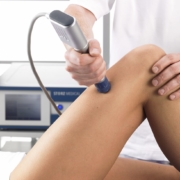
  • Treatment: A handheld applicator delivers rapid pulses while the practitioner adjusts its position and intensity according to the plan and your tolerance.
  • Aftercare: You receive guidance about activity, expected soreness and what should prompt a call to the clinic.

OCWC’s service page describes the treatment itself as approximately five to ten minutes. The full appointment may take longer because assessment, positioning and follow-up advice matter. The number and spacing of visits should reflect the diagnosis and your response rather than a universal package.

Does Shockwave Therapy Hurt?

You may feel rhythmic tapping, pressure or localized discomfort, particularly over a sensitive tendon. Treatment should be tolerable, and the practitioner can modify the intensity. Speaking up does not undermine the session; it helps the clinician match the application to your response.

Temporary soreness, redness, swelling, bruising, tingling or altered sensation can occur afterward. Serious complications appear uncommon when an appropriately trained professional screens and treats the patient, but no procedure is risk-free. Contact the clinic if you develop severe, worsening or unusual symptoms.

Recovery, Results and a Broader Care Plan

Many people return to normal daily tasks after an appointment, although the practitioner may recommend avoiding strenuous or high-impact loading for a short period. Follow the advice provided for your specific condition rather than assuming that “no downtime” means every activity is appropriate immediately.

Improvement may unfold gradually across a series of visits and continue after the final session. Track function as well as pain. Walking farther, gripping with less limitation, tolerating stairs or completing rehabilitation exercises can provide more meaningful evidence of progress than a single pain score.

Shockwave therapy often makes the most sense as one part of a plan. Progressive loading, mobility work, sleep, recovery habits and changes to aggravating activities may all matter. At Oliver Chiropractic Wellness Clinic, practitioners can coordinate chiropractic care, massage therapy, acupuncture and rehabilitation recommendations when those services suit the patient’s findings and goals.

More treatment is not always better. Each service should have a clear purpose, and the plan should change when the patient’s response changes. If progress stalls, reassessment may identify a need to revise the diagnosis, modify rehabilitation, request imaging or refer to another healthcare professional.

Frequently Asked Questions About Shockwave Therapy Edmonton

How Many Shockwave Therapy Edmonton Sessions Might I Need?

There is no single schedule for everyone. Published patient guides commonly describe a short series of treatments, but the appropriate number depends on the condition, device, clinical protocol and response. Ask what outcome will be measured and when the plan will be reviewed.

Do I need imaging first?

Not necessarily. Your history and examination often guide the initial decision. Imaging may be appropriate when the diagnosis is uncertain, symptoms suggest another problem or the result would change care.

Can I exercise after treatment?

Possibly, with modifications. Your practitioner may advise temporary limits on running, jumping, heavy lifting or other demanding activity. The goal is usually appropriate loading, not indefinite rest.

Is treatment covered by insurance?

Benefits vary by insurer, plan and provider designation. Ask OCWC for current billing details and confirm your individual coverage directly with your insurer before beginning care.

Is it the same as therapeutic ultrasound?

No. Both use handheld devices and conductive gel, but they produce and deliver energy differently. Your practitioner can explain which modality is being proposed and why.

Can Shockwave Therapy Replace Rehabilitation?

It should not automatically replace a well-designed rehabilitation program. ESWT may help some patients tolerate movement or loading more comfortably, while exercise addresses strength, capacity and confidence. The best combination depends on the tissue involved, the stage of the condition and what you need your body to do.

Take the Next Step With OCWC

Persistent tendon or soft-tissue pain deserves more than guesswork. A careful assessment can help determine whether ESWT fits your condition, what realistic progress may look like and how treatment could integrate with an active recovery plan.

Learn about shockwave therapy at OCWC, then book an appointment online or call 780-455-2112 to discuss your next step with Oliver Chiropractic Wellness Clinic in downtown Edmonton.

This article provides general educational information and does not replace individualized medical advice, diagnosis or treatment.

What Chiropractic Patients Ought To Know About Tennis Elbow

May 22, 2017/0 Comments/in Chiropractic Blog /by Dr. Kent Ferguson

Even if you have never stepped foot onto a court before, you may end up with tennis elbow. Occurring along the muscle that allows extension of the wrist, it is a painful condition that can linger for weeks or months.

Previously, tennis elbow primarily showed up in athletes. Due to the increased interest in physical fitness, tennis elbow is being found in everyday exercisers, as well as people who perform work-related repetitive motion.

Tennis elbow presents several symptoms. Pain will occur on the outside of the elbow an inch or so down from the bony part.

There may also be pain when the individual tries to extend the hand and fingers against resistance. Extreme weakness in the wrist is another symptom.

I have been diagnosed with tennis elbow. Now what?

Tennis elbow is often difficult to diagnose, which can delay treatment. A correct diagnosis of tennis elbow is the first step towards being able to treat the condition and rehab the afflicted area. From there, a variety of treatments for tennis elbow are available.

Passive remedies like rest, ice, and arm braces are critical components to healing tennis elbow. Take measures to reduce the movements that aggravate the pain, and use ice at regular intervals to help minimize pain and inflammation.

An arm brace supports and stabilizes the area to promote healing. These remedies assist greatly in treating the condition, especially in the beginning.

Active remedies consist of stretching and strengthening exercises, and are vital aspects of improving the condition. Individuals suffering from tennis elbow should begin an exercise regimen as soon as the pain allows.

Follow a doctor’s recommendation for the rehabilitative program exercises. The goal is to build strength.

An individual dealing with tennis elbow may utilize a variety of medicinal remedies to manage pain and inflammation. Over-the-counter pain relievers and steroid injections are commonly used to treat the condition. Following doctor’s orders when taking medications is strongly recommended.

Untraditional remedies also provide vast improvements in tennis elbow, and these treatments have gained favor in the last few years due to their effectiveness. Regimens of massage therapy and acupuncture work on small areas contributing to the condition, and make significant strides in pain reduction and promote the body’s restorative healing process.

Another remedy that offers strong benefits to treating tennis elbow is chiropractic care. A chiropractor assesses the condition, then lays out a plan to promote healing.

Treatment often includes working to align the bones and treating the surrounding joints so they function at maximum capacity, and can “take up the slack” of the injured area while it heals. Chiropractic care serves the dual purpose of treating the condition directly, and healing the areas around the injury so that the body continues to strengthen and renew.

In a very small number of cases, the only remedy for tennis elbow is surgery. This is considered as the last straw, once all other forms of treatment have been exhausted.

The best way to treat tennis elbow is to avoid it in the first place. Be sure to stretch before exercising, consistently perform strengthening exercises, employ correct techniques and proper equipment during physical activity, and don’t overexert your arms (this goes for your entire body, by the way) during physical activity.

If you are diagnosed with tennis elbow, it’s essential to understand the variety of treatment options available. The best course is often a blend of more than one remedy. Chiropractic care should be part of your healing process, as it helps decrease pain, reduce healing time, and offers a non-medicinal approach to treating the body as a whole.

Shockwave Therapy Treatment in Edmonto

Shockwave Therapy Offers a Host of Benefits

October 21, 2015/0 Comments/in Shockwave Therapy /by Dr. Kent Ferguson

A sore heel that makes the first steps of the morning difficult. An elbow that complains every time you grip a coffee mug. A shoulder that limits your workout, your sleep, or even reaching into a cupboard. When pain keeps returning, the right care is not simply about getting through today. It is about restoring comfortable movement and protecting the activities that matter to you. For people dealing with certain persistent muscle and tendon problems, shockwave therapy benefits may include less pain, better function, and new momentum in a broader recovery plan.

Shockwave therapy is a non-invasive option offered at Oliver Chiropractic Wellness Clinic (OCWC) in Edmonton. It does not promise an instant cure, and it is not appropriate for every condition. A proper assessment helps determine what is causing the pain, whether this treatment fits your needs, and how it could work alongside exercise, chiropractic care, or other rehabilitation strategies.

What Is Shockwave Therapy?

Shockwave therapy, also called extracorporeal shockwave therapy, uses acoustic pressure waves produced outside the body. A clinician applies gel to the skin and places a handheld applicator over the area being treated. The device then delivers rapid pulses into the underlying tissue. Despite the name, the treatment does not send an electrical shock through your body.

Musculoskeletal applications use different settings and treatment approaches to address selected problems involving tendons, fascia, muscles, and other tissues. The type of device, energy level, target area, and treatment plan all matter, which is why an individualized clinical evaluation should come first.

How Acoustic Waves Interact With Injured Tissue

Researchers are still studying the exact ways shockwave therapy works. Current evidence suggests that acoustic energy creates a controlled mechanical stimulus in the treatment area. This may influence pain signalling, encourage changes in local circulation, and support cellular activity involved in tissue remodelling and collagen production. In certain calcific tendon conditions, treatment may also help disrupt mineral deposits over time.

These effects do not mean that tissue changes overnight. Some people notice a short-term change in discomfort, while more durable improvements may take several weeks. Results depend on the diagnosis, how long the problem has been present, activity demands, general health, and participation in the rest of the care plan.

Shockwave Therapy Benefits for Active Adults

Many people explore this treatment because they want a conservative option that supports an active life. It requires no incision or injection, appointments are brief, and most patients can continue with much of their usual routine.

Key Shockwave Therapy Benefits

Non-invasive care: Treatment is delivered through the skin, without surgery or needles.

Short treatment time: Treatment application itself as approximately 5 to 10 minutes, although assessment and appointment time may be longer.

Adjustable intensity: The clinician can adapt the pulsing pressure to the treatment goal and your comfort.

Support for pain and function: Appropriate patients may experience reduced sensitivity and improved ability to move, work, exercise, or complete rehabilitation activities.

A complement to active care: Shockwave therapy can be paired with progressive exercise, load management, mobility work, chiropractic treatment, or soft-tissue care when clinically appropriate.

It is best to view shockwave therapy as one tool within a personalized plan. Tendons and muscles still need an appropriate progression of movement and loading. Your clinician may temporarily modify an aggravating activity while helping you build capacity for a confident return.

What Conditions May Respond to Shockwave Therapy?

Shockwave therapy is often considered for chronic or slow-to-improve musculoskeletal problems, especially when rest and initial conservative care have not produced enough progress. A symptom such as shoulder, hip, or foot pain can have many causes, so the diagnosis matters more than the location alone.

Common Tendon and Soft-Tissue Problems

Depending on the assessment, treatment may be considered for conditions such as:

  • Plantar fasciitis or persistent pain near the bottom of the heel.
  • Achilles tendinopathy at the back of the ankle.
  • Patellar tendinopathy below the kneecap, sometimes called jumper’s knee.
  • Tennis elbow or golfer’s elbow related to irritated elbow tendons.
  • Rotator cuff tendinopathy or certain calcific shoulder conditions.
  • Greater trochanteric pain syndrome and selected tendon problems around the hip.

Learn more about the conditions treated and OCWC’s approach on the shockwave therapy service page. An in-person assessment can help distinguish an irritated tendon from a joint, nerve, bone, or referred-pain problem that may require a different plan.

What to Expect and Is Shockwave Therapy Right for You?

Your first step is a clinical conversation. The practitioner will ask about the onset of your symptoms, what makes them better or worse, previous injuries, health conditions, medications, and treatments you have already tried. A physical examination helps identify the painful structure and determine whether shockwave therapy is a reasonable option. Imaging or referral may be recommended when the diagnosis is uncertain or another condition is suspected.

During treatment, you will usually feel rhythmic tapping or pulsing pressure. Sensitive areas can feel uncomfortable, but the intensity can be adjusted. Clear feedback helps the clinician balance comfort with the treatment goal. The number and spacing of visits will depend on the condition and your response rather than a one-size-fits-all formula.

After Your Appointment and Next Steps

Temporary soreness, redness, swelling, or mild bruising can occur after treatment. Follow the activity advice provided by your practitioner, even if the area feels better immediately. A short-term reduction in pain does not necessarily mean the tissue is ready for a sudden increase in running, lifting, or sport. Gradual load management helps protect progress.

Shockwave therapy is not appropriate for everyone. Tell your practitioner if you are pregnant, take anticoagulant medication, have a bleeding disorder or active infection, have an implanted medical device, have cancer in or near the treatment area, or may have a tendon rupture. Other precautions can apply depending on the body area, device, and energy level. Your provider will screen your health history and explain expected benefits, limitations, and alternatives before proceeding.

Persistent pain can narrow your choices one small compromise at a time. The goal of care is to help you understand the problem and build a practical route back to comfortable movement. For the right person and condition, shockwave therapy benefits can support that process without an invasive procedure or lengthy recovery period.

Ready to find out whether this treatment fits your goals? Call Oliver Chiropractic Wellness Clinic at 780-455-2112 or book a shockwave therapy appointment online. The OCWC team can assess your concern and recommend a plan based on your needs, health history, and preferred activities.

Book an Appointment

We respect your time and budget. Our appointments are efficient, flexible, and support a variety of payment options. Book an appointment for you or your family today by calling 780-455-2112.


Book online

Recent Blogs

  • Chiropractic Care After a Car Accident
  • Acupuncture and Anxiety in Edmonton
  • RAPID NeuroFascial Release Therapy
  • Edmonton Deep Tissue Massage
  • Herniated Disc Injury

CONTACT US

10324 112 Street NW
Edmonton, AB T5K 1N1

1-780-455-2112
info@ocwc.ca

  • Facebook
  • Twitter
  • Youtube
  • Yelp

OFFICE HOURS

MONDAY – THURSDAY
8:00am – 6:00pm

FRIDAY
8:00am – 4:00pm

SATURDAYS & EVENINGS
By appointment only

SUNDAY
Closed

LEARN MORE

  • CHIROPRACTIC
  • MASSAGE
  • ACUPUNCTURE
  • SHOCKWAVE THERAPY
  • FACIAL ACUPUNCTURE

RESOURCES

  • NEW PATIENTS
  • FAQ
  • PRIVACY POLICY
© Copyright - Oliver Chiropractic Wellness Clinic - powered by Enfold WordPress Theme
  • Why OCWC
  • Services
  • New Patients
  • Blog
  • Contact
  • Book Online
Scroll to top