
• Book Online
(780) 455-2112 | info@ocwc.ca
Oliver Chiropractic Wellness Clinic
  • Why OCWC
    • About Us
    • Our Team
    • Client Reviews
  • Services
    • Chiropractic
    • Massage
    • Custom Orthotics
    • Cupping Therapy
    • Hot Stone Massage Therapy
    • RAPID NeuroFascial Release Therapy
    • Graston Technique
    • Manual Lymphatic Drainage
    • Craniosacral Massage Therapy
    • Stretch Therapy
    • Acupuncture
    • Shockwave Therapy
    • Manual Osteopoathy
    • FAQ
  • New Patients
    • What to Expect
    • Forms
      • OCWC Cancelation/Financial Policy
  • Blog
  • Contact
    • General Inquiries
  • Book Online
  • Menu Menu
You are here: Home1 / sports injury

Posts

shockwave therapy for chronic muscle tightness

Shockwave Therapy for Chronic Muscle Tightness After an Injury

November 2, 2026/0 Comments/in Shockwave Therapy /by Dr. Kent Ferguson

You stretch, use a massage ball, and feel better for a few hours. Then the familiar restriction returns. Shockwave therapy for chronic muscle tightness may be worth considering when an old injury has healed but one area still feels guarded, tender, or difficult to move. At Oliver Chiropractic Wellness Clinic (OCWC), the goal is not simply to chase the tight spot. A thoughtful assessment looks at why the area keeps tightening and whether radial pressure-wave therapy belongs in a broader recovery plan.

Persistent tightness can affect work, workouts, sleep, and the activities you enjoy. It may appear in a calf after an ankle injury, around a shoulder after a fall, or through the hip after months of compensating for knee pain. The sensation is real, but the explanation is not always as simple as a muscle being “too short.” Strength, sensitivity, movement habits, and the demands placed on the tissue can all contribute.

This article explains what chronic muscle tightness can mean, how OCWC’s STORZ MEDICAL MASTERPULS MP100 works, and what to expect if radial pressure-wave treatment is appropriate for you.

Why Can an Old Injury Still Feel Tight?

After an injury, the body often changes how it moves. You may shorten a stride, avoid reaching overhead, or shift weight away from a painful side. Those protective strategies can be useful at first. If they continue after the tissue has recovered, however, some muscles may work harder while others contribute less.

The nervous system can also remain protective. A movement associated with past pain may feel threatening even when the original injury is no longer acute. The result can be a recurring sense of stiffness, guarding, or tenderness. That does not mean the discomfort is imaginary. It means pain, muscle tone, and movement are influenced by more than tissue length alone.

Common contributors include:

  • reduced strength or endurance after a period of rest;
  • returning to activity faster than the area can tolerate;
  • repeated work, sport, or postural demands;
  • sensitive myofascial trigger points;
  • limited movement in a nearby joint; and
  • sleep, stress, and recovery habits that affect pain sensitivity.

This is why repeatedly stretching the tightest area may not solve the problem. The muscle may need a better combination of symptom relief, progressive loading, and movement retraining.

What Is Chronic Muscle Tightness?

“Tightness” describes a feeling, not a single diagnosis. One person may have a tender band within a muscle. Another may have limited joint motion, a tendon problem, protective muscle activity, or referred symptoms from another area. A clinician needs to determine what the sensation represents before recommending treatment.

Chronic usually means the problem has persisted or repeatedly returned beyond the expected early healing period. It does not automatically mean permanent damage. Muscles and connective tissues remain adaptable, and a well-matched care plan can often improve comfort and function.

Signs That the Problem Deserves an Assessment

Consider an assessment when tightness:

  • returns quickly after stretching or massage;
  • consistently limits the same movement;
  • reduces strength, balance, or confidence;
  • interferes with work, training, or sleep;
  • follows a significant injury or surgery; or
  • comes with recurring pain in a nearby joint.

Seek prompt medical care for unexplained swelling, redness, fever, progressive weakness, loss of sensation, severe night pain, or symptoms following a new traumatic injury. These features require a different level of investigation.

What Is Radial Pressure-Wave Therapy?

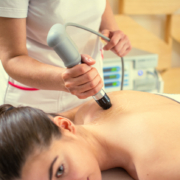
Radial pressure-wave therapy is a non-invasive treatment that sends mechanical acoustic pulses into an area through a handheld applicator. A practitioner places coupling gel on the skin, positions the applicator over the target tissue, and adjusts the treatment settings to the area and the patient’s tolerance.

OCWC uses the STORZ MEDICAL MASTERPULS MP100. STORZ describes the MP100 as a radial pressure-wave system with an integrated compressor and adjustable pressure and frequency. Radial waves spread outward from the applicator and are commonly used for superficial musculoskeletal tissues and trigger-point applications.

Radial pressure waves are not the same as focused shockwaves. Focused systems concentrate energy at a selected depth, while radial systems disperse pressure from the surface into a broader region. Calling every device simply “shockwave” can hide that distinction, so the type of equipment and the clinical goal both matter.

How the MASTERPULS MP100 Is Used

The practitioner first identifies the tissue most closely linked to your symptoms. Treatment generally produces a quick, rhythmic tapping sensation. The applicator may move across a muscle or spend more time over a locally sensitive area. Settings should reflect the body region, clinical findings, comfort, and intended treatment response.

The machine is only one part of the appointment. Rechecking movement, strength, or tenderness helps connect the treatment to a meaningful functional goal.

How Shockwave Therapy for Chronic Muscle Tightness May Help

Researchers have studied extracorporeal shockwave approaches for myofascial pain and trigger points. A 2024 systematic review in the American Journal of Physical Medicine & Rehabilitation reported improvements in pain and function compared with control conditions and ultrasound. The authors also found that shockwave treatment was not clearly superior to every active option, such as exercise, needling, injections, or laser treatment. Differences among protocols and studies make sweeping claims inappropriate.

Proposed effects include temporary changes in pain sensitivity, mechanical stimulation of the treated area, and local biological responses associated with tissue adaptation. A reduction in tenderness may make it easier to move or exercise, but treatment does not “erase” every adhesion or guarantee that tightness will disappear.

The practical question is whether reducing sensitivity can help you participate more comfortably in the work that builds lasting capacity. For many persistent problems, that work includes strengthening, restoring range of motion, and gradually reintroducing the activity that previously provoked symptoms.

What the Evidence Does and Does Not Say

The evidence is more relevant to diagnosed myofascial pain and trigger points than to every complaint described as tightness. Studies also use different devices, settings, treatment schedules, and outcome measures. Your response cannot be predicted from an average research result.

A responsible recommendation therefore begins with assessment. If weakness, joint restriction, nerve irritation, or another condition better explains the symptoms, the plan should address that finding rather than treating a tender muscle by default.

Who Might Benefit From Shockwave Therapy for Chronic Muscle Tightness?

This approach may be considered for an adult with localized muscular tenderness or trigger points after the acute injury stage has passed, especially when symptoms have plateaued despite reasonable self-care. It may also suit someone who wants a non-invasive option that can be combined with movement-based rehabilitation.

A good candidate is willing to take an active role. Treatment is less compelling when a person expects the device to correct workload, sleep, strength, or movement habits without changing anything else.

It may not be appropriate when symptoms arise from a new tear, fracture, blood clot, infection, tumour in the treatment field, or another condition requiring medical management. Pregnancy, implanted devices, bleeding risk, medication use, and altered sensation are among the factors that should be discussed during screening. The exact precautions depend on the treatment location and individual health history.

What Happens During an OCWC Appointment?

An appointment should begin with questions, not the applicator. Your practitioner may ask when the original injury occurred, what has changed since then, which activities aggravate the area, and what you have already tried. The physical assessment may include range of motion, resisted movements, palpation, strength, and relevant joint or neurological screening.

If radial treatment is suitable, the practitioner applies gel and begins at a tolerable setting. You should be able to describe what you feel throughout the session. More intensity is not automatically better, and treatment does not need to become an endurance test.

What Shockwave Therapy for Chronic Muscle Tightness Feels Like

Most people describe a series of quick taps or pulses. A sensitive point may feel sharper than the surrounding muscle. The practitioner can change the pressure, frequency, applicator position, or treatment duration based on your response.

Temporary tenderness, warmth, or mild aching may occur afterward. Your practitioner should explain what level of response is expected and which symptoms warrant a call. Treatment schedules vary, so progress should be judged by meaningful measures such as easier movement, improved activity tolerance, or less recurring discomfort rather than by completing a predetermined package.

Why Active Rehabilitation Still Matters

Symptom relief creates an opportunity; rehabilitation uses it. When appropriate, your plan may include:

  • gentle mobility that does not repeatedly flare the area;
  • progressive strengthening for the affected muscle and nearby regions;
  • endurance work for repetitive occupational or sport demands;
  • graded exposure to movements you have been avoiding;
  • changes to training volume, workstation setup, or lifting technique; and
  • recovery strategies that support sleep and consistent activity.

For example, a runner with a persistently tight calf may need more than calf stretching. The plan might address ankle motion, calf strength, weekly running volume, footwear changes, and the speed at which hills were reintroduced. Someone with shoulder tightness after an old injury may benefit from gradually rebuilding overhead strength and confidence rather than avoiding the movement indefinitely.

OCWC may combine radial pressure-wave therapy with chiropractic care, soft-tissue techniques, or rehabilitative exercise when those services fit the assessment. The combination should have a clear purpose, not simply add more treatment.

When should you choose another path?

Persistent tightness sometimes signals that the original diagnosis needs another look. Pain that travels with numbness or tingling, progressive weakness, unexplained bruising, a hot swollen limb, or an inability to bear weight needs appropriate medical assessment. A sudden loss of function after a new injury should not be treated as routine muscle tension.

It is also reasonable to reconsider the plan when objective function does not improve. Good care adapts. That might mean modifying exercises, pausing treatment, obtaining imaging, or referring to another healthcare professional.

Move Beyond the Stretch-and-Repeat Cycle

An old injury does not have to dictate how you move forever, but recurring tightness deserves more than a generic solution. A careful assessment can identify what is sensitive, what has lost capacity, and which treatment options make sense for your goals.

Learn more about shockwave therapy at Oliver Chiropractic Wellness Clinic. When you are ready to have the area assessed, book a shockwave therapy appointment through OCWC’s Jane page or call the clinic at 780-455-2112.

This article provides general education and does not replace individualized medical advice, diagnosis, or treatment.

shockwave therapy Edmonton

Shockwave Therapy in Edmonton

September 16, 2026/0 Comments/in Shockwave Therapy /by Dr. Kent Ferguson

A Complete Guide to Shockwave Therapy in Edmonton

Persistent heel, shoulder, knee or elbow pain can shrink your world one decision at a time. You skip the run, change how you lift groceries or avoid stairs because the same irritated area keeps demanding attention. For people researching shockwave therapy Edmonton clinics offer, the important question is not whether a treatment sounds impressive. It is whether that treatment fits the condition, your health history and the activities you want to regain.

Extracorporeal shockwave therapy, often shortened to ESWT, is a non-invasive option used for selected persistent tendon and soft-tissue problems. It delivers controlled acoustic pressure waves through the skin. A practitioner may include it in a broader plan when assessment findings support its use, especially when symptoms have not responded as expected to activity changes or other conservative care.

This guide explains what the treatment is, why clinicians use it, which conditions may be considered and what an appointment can involve. It also covers limitations and safety questions so you can have a more useful conversation with your healthcare provider.

What Is Shockwave Therapy?

Shockwave therapy uses a handheld applicator to send brief mechanical pressure waves into a targeted area. Despite the name, it does not deliver an electrical shock. “Extracorporeal” simply means the energy originates outside the body and passes through the skin to the treatment site.

Therapeutic ESWT also differs from the high-energy lithotripsy used in hospitals to break up kidney stones. Musculoskeletal treatment uses protocols selected for tendons and other soft tissues. Devices and treatment approaches vary, which is one reason results from one condition or clinic should not be generalized to every patient.

How Acoustic Waves Interact With Tissue

Researchers continue to study the precise mechanisms. Current literature suggests that the mechanical stimulus can influence local biological activity, pain signalling, circulation and tissue-remodelling processes. The goal is to encourage a response in an area where symptoms have become persistent, not to force tissue into instant repair.

That distinction matters. Shockwave therapy is not a cure-all, and a loud device does not equal a stronger clinical result. The diagnosis, treatment settings, target area, rehabilitation plan and individual response all influence whether the therapy is useful.

How Shockwave Therapy Edmonton Patients May Benefit

Many people explore this option because it can be delivered in a clinic without an incision, injection or anaesthetic. Appointments are relatively short, and patients can usually leave on their own. Those practical advantages can make it easier to fit care around work, family and an active lifestyle.

Depending on the diagnosis and response, potential benefits may include:

Reduced sensitivity or pain in the treated area.

Improved tolerance for walking, lifting, gripping or exercise.

Support for a progressive strengthening or rehabilitation program.

A non-surgical option to discuss before considering more invasive procedures.

Treatment intensity that can be adjusted during the appointment.

These are possibilities, not promises. Some patients notice a change early, others improve gradually, and some do not receive meaningful benefit. A responsible plan should define what progress would look like and reassess treatment if that progress does not occur.

Shockwave Therapy Edmonton Options for Persistent Tendon Pain

The strongest everyday use case is usually a persistent, localized tendon or fascia problem rather than unexplained pain anywhere in the body. A practitioner may consider ESWT for conditions such as:

  • Plantar fasciitis or persistent pain near the heel.
  • Achilles tendinopathy at the back of the ankle.
  • Patellar tendinopathy below the kneecap.
  • Tennis elbow or golfer’s elbow.
  • Rotator-cuff-related shoulder pain.
  • Selected calcific shoulder conditions.

This list describes common clinical applications, not automatic indications. Even when the painful location appears on the list, the underlying problem may require another approach.

Why an Accurate Diagnosis Matters

Heel pain can arise from more than plantar fasciitis. Shoulder discomfort can involve a tendon, joint, neck or nerve. Pain around the hip may come from several different structures. Treating a location without understanding the likely source can waste time and delay more appropriate care.

A useful assessment considers when symptoms began, what makes them better or worse, previous injuries, medications, relevant health conditions and your current activity demands. The physical examination may evaluate range of motion, strength, tenderness, load tolerance and neurological signs. Imaging is not automatically required, but a practitioner may recommend it or refer you when the history or examination raises a concern.

Who May Be a Good Candidate?

A possible candidate often has a well-defined tendon or soft-tissue condition that has persisted despite reasonable conservative care. That might include an active adult whose heel pain keeps returning, a recreational athlete with a stubborn tendon problem or a person whose elbow pain limits work and household tasks.

During an assessment, your practitioner may consider whether:

The symptoms are persistent and can be linked to a suitable treatment target.

Rest, activity modification or rehabilitation has produced limited improvement.

You have a functional goal that can be measured over time.

You are prepared to follow activity and exercise recommendations between visits.

Your health history does not reveal a contraindication or a reason for referral.

When Shockwave Therapy May Not Be Appropriate

Screening is essential. Treatment may be unsuitable when the proposed area contains an active infection, suspected fracture, acute tendon or fascial rupture, tumour or significantly impaired circulation or sensation. Pregnancy, bleeding disorders, blood-thinning medication, certain implants and some recent injections or medications can also change the decision.

Contraindications depend partly on the device, energy level and treatment location. Tell your practitioner about pregnancy, medical diagnoses, surgeries, implants, medications and recent procedures before treatment. Never stop a prescribed medication because of general online advice; discuss it with the prescribing professional and the clinician providing ESWT.

What to Expect During an Appointment

A typical visit follows a straightforward sequence:

  • Assessment: The practitioner reviews your symptoms, history, goals and relevant examination findings before confirming that the treatment is appropriate.
  • Positioning: You sit or lie in a position that makes the target area accessible and comfortable.
  • Preparation: The practitioner locates the tender or affected tissue and applies gel to help transmit the acoustic waves.
  • Treatment: A handheld applicator delivers rapid pulses while the practitioner adjusts its position and intensity according to the plan and your tolerance.
  • Aftercare: You receive guidance about activity, expected soreness and what should prompt a call to the clinic.

OCWC’s service page describes the treatment itself as approximately five to ten minutes. The full appointment may take longer because assessment, positioning and follow-up advice matter. The number and spacing of visits should reflect the diagnosis and your response rather than a universal package.

Does Shockwave Therapy Hurt?

You may feel rhythmic tapping, pressure or localized discomfort, particularly over a sensitive tendon. Treatment should be tolerable, and the practitioner can modify the intensity. Speaking up does not undermine the session; it helps the clinician match the application to your response.

Temporary soreness, redness, swelling, bruising, tingling or altered sensation can occur afterward. Serious complications appear uncommon when an appropriately trained professional screens and treats the patient, but no procedure is risk-free. Contact the clinic if you develop severe, worsening or unusual symptoms.

Recovery, Results and a Broader Care Plan

Many people return to normal daily tasks after an appointment, although the practitioner may recommend avoiding strenuous or high-impact loading for a short period. Follow the advice provided for your specific condition rather than assuming that “no downtime” means every activity is appropriate immediately.

Improvement may unfold gradually across a series of visits and continue after the final session. Track function as well as pain. Walking farther, gripping with less limitation, tolerating stairs or completing rehabilitation exercises can provide more meaningful evidence of progress than a single pain score.

Shockwave therapy often makes the most sense as one part of a plan. Progressive loading, mobility work, sleep, recovery habits and changes to aggravating activities may all matter. At Oliver Chiropractic Wellness Clinic, practitioners can coordinate chiropractic care, massage therapy, acupuncture and rehabilitation recommendations when those services suit the patient’s findings and goals.

More treatment is not always better. Each service should have a clear purpose, and the plan should change when the patient’s response changes. If progress stalls, reassessment may identify a need to revise the diagnosis, modify rehabilitation, request imaging or refer to another healthcare professional.

Frequently Asked Questions About Shockwave Therapy Edmonton

How Many Shockwave Therapy Edmonton Sessions Might I Need?

There is no single schedule for everyone. Published patient guides commonly describe a short series of treatments, but the appropriate number depends on the condition, device, clinical protocol and response. Ask what outcome will be measured and when the plan will be reviewed.

Do I need imaging first?

Not necessarily. Your history and examination often guide the initial decision. Imaging may be appropriate when the diagnosis is uncertain, symptoms suggest another problem or the result would change care.

Can I exercise after treatment?

Possibly, with modifications. Your practitioner may advise temporary limits on running, jumping, heavy lifting or other demanding activity. The goal is usually appropriate loading, not indefinite rest.

Is treatment covered by insurance?

Benefits vary by insurer, plan and provider designation. Ask OCWC for current billing details and confirm your individual coverage directly with your insurer before beginning care.

Is it the same as therapeutic ultrasound?

No. Both use handheld devices and conductive gel, but they produce and deliver energy differently. Your practitioner can explain which modality is being proposed and why.

Can Shockwave Therapy Replace Rehabilitation?

It should not automatically replace a well-designed rehabilitation program. ESWT may help some patients tolerate movement or loading more comfortably, while exercise addresses strength, capacity and confidence. The best combination depends on the tissue involved, the stage of the condition and what you need your body to do.

Take the Next Step With OCWC

Persistent tendon or soft-tissue pain deserves more than guesswork. A careful assessment can help determine whether ESWT fits your condition, what realistic progress may look like and how treatment could integrate with an active recovery plan.

Learn about shockwave therapy at OCWC, then book an appointment online or call 780-455-2112 to discuss your next step with Oliver Chiropractic Wellness Clinic in downtown Edmonton.

This article provides general educational information and does not replace individualized medical advice, diagnosis or treatment.

Book an Appointment

We respect your time and budget. Our appointments are efficient, flexible, and support a variety of payment options. Book an appointment for you or your family today by calling 780-455-2112.


Book online

Recent Blogs

  • Cupping Explained:
  • Acupuncture In Edmonton: A Modern Guide
  • Shockwave Therapy for Chronic Muscle Tightness After an Injury
  • How to Make Your Chiropractic Adjustment Last Longer
  • How Acupuncture Works

CONTACT US

10324 112 Street NW
Edmonton, AB T5K 1N1

1-780-455-2112
info@ocwc.ca

  • Facebook
  • Twitter
  • Youtube
  • Yelp

OFFICE HOURS

MONDAY – THURSDAY
8:00am – 6:00pm

FRIDAY
8:00am – 4:00pm

SATURDAYS & EVENINGS
By appointment only

SUNDAY
Closed

LEARN MORE

  • CHIROPRACTIC
  • MASSAGE
  • ACUPUNCTURE
  • SHOCKWAVE THERAPY
  • FACIAL ACUPUNCTURE

RESOURCES

  • NEW PATIENTS
  • FAQ
  • PRIVACY POLICY
© Copyright - Oliver Chiropractic Wellness Clinic - powered by Enfold WordPress Theme
  • Why OCWC
  • Services
  • New Patients
  • Blog
  • Contact
  • Book Online
Scroll to top